Saturday, October 17, 2026
Home Blog Page 85

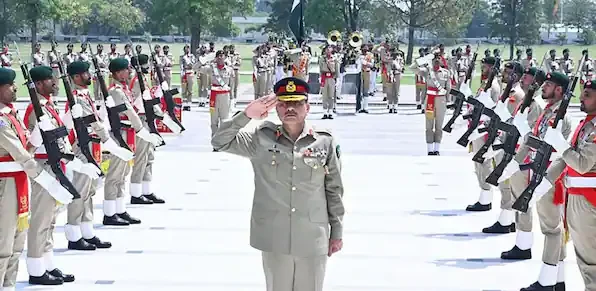
Pakistan bracing for military rule?

Pakistan Army Chief Asim Munir

By Ajay Kaul

New Delhi, Aug 3 (NVI) Is Pakistan headed for military rule once again?

This feeling is gaining ground in the wake of a very significant statement given by Pakistani Minister Mohsin Naqvi, which may be clubbed with the extremely bad situation in the country as well as in occupied Jammu and Kashmir and Balochistan.

Addressing an Economic Summit in Islamabad, Naqvi, the Minister for Interior Affairs, said Pakistan’s governance system has “collapsed” and the country’s decades-old model has failed to provide justice, services or solutions.

He referred to Pakistan’s economic failure and unmanageable debt, because of which living conditions in the country have become frustrating.

He warned that continuing on the same path would mean the exact same crises will persist a decade from now.

He slammed the ongoing budget strategies as operating purely “in negative” cycles of debt dependency and short-term survival rather than fixing foundational flaws.

Flagging the deep frustration among GenZ, he noted that young people are demanding merit-based jobs and equal opportunity rather than basic financial aid.

Naqvi’s statement, critical of his own government headed by Prime Minister Shehbaz Sharif, has caught a lot of attention, particularly because he is considered close to Pakistan Army and its chief Field Marshal Asim Munir.

The remarks are seen as part of the usual modus operandi employed by the Pakistan Army over the last nearly eight decades to seize power.

In the past, whenever the Army toppled political governments in Pakistan, the prelude was set with the claims about failure of governance. A narrative is set that the political administration is unable to lead the country and the Army needs to step in to “save” the nation.

Asim Munir seems to be venturing on the same script, possibly preparing ground for a coup.

It is believed Naqvi deliberately dropped hints about the plans being made to topple the government of Shehbaz Sharif.

According to people claiming to know about the plan, Munir would be made the President with full powers and Naqvi would be made the Prime Minister.

To discuss the plan, a meeting of the top military brass was held at ISI headquarters a few days back. It was attended by important ISI officials, Sector commanders of the Pakistan Army and other key officials.

At the meeting, it was underlined that “this system has collapsed” and the Army would bring a new system.

After the meeting, Naqvi is understood to have met President Asif Ali Zardari and told him that he would have to step down and leave the country, if he wished safety for himself.

Significantly, Munir would not have to worry about how the US, which has immense control on Pakistan, would take react if a coup is undertaken since he enjoys excellent relations with President Donald Trump.

Timing of the Statement

Naqvi’s statement is significant as it came at a time when occupied Jammu and Kashmir has been on the boil for two months.

A mass uprising has been going on in the occupied territories and the ostensible political administration has collapsed completely.

Over 80 people have been killed and hundreds of others injured in the ongoing military crackdown, despite which lakhs of people, including women and children, remain on the streets, demanding their basic and political rights.

Elections scheduled for the so-called Assembly of occupied Jammu and Kashmir could not be held due to intense resistance by the locals. The people of Pakistan-occupied Jammu and Kashmir (POJK) not only announced total boycott of the sham elections but also prevented the process to take place.

They have made it clear that they won’t anymore allow 12 of the 53 seats in the Assembly to be decided by the Pakistani regime.

Similarly, in occupied Balochistan, situation is extremely bad for Pakistan as the Baloch freedom fighters have been causing massive damage and destruction to Pakistani military and assets.

Armed Baloch groups, like Baloch Liberation Army (BLA) and Baloch Liberation Front (BLF), often seize control of cities of Balochistan from the Pakistani forces and maintain authority for hours and days, demonstrating their growing prowess.

The situation is so bad that even the Pakistani military personnel don’t feel safe there. Their free movement in Balochistan has become nearly impossible as the Baloch freedom fighters attack them at will.

The same is the condition in Khyber Pakhtunkhwa province, where TTP has made life hell for Pakistani military and police.

In the month of June, TTP killed 304 personnel of Pakistani government forces and injured 477 in 315 operations. At least 68 personnel of the Pakistani forces were captured by the TTP.

Due to continuous fear, many Pashtun policemen have quit their jobs in Khyber Pakhtunkhwa as TTP clearly has acquired an upper hand.

Only two days back, TTP fighters overran a police station in Hangu, killing 13 policemen, injuring 28 and capturing several of them. They capture policemen were released later, but not before being humiliated.

The TTP also seized a huge quantity of arms and ammunition from the police camp.

The TTP fighters also roam freely in Khyber Pakhtunkhwa and even set up pickets on highways, marking a huge embarrassment for the Pakistani State.

Amidst speculation about a coup, a large number of massive containers have appeared in Islamabad since yesterday, which is normally done to check mass protests in the capital of Pakistan.

So, something big seems to be brewing, seriously. (NVI)
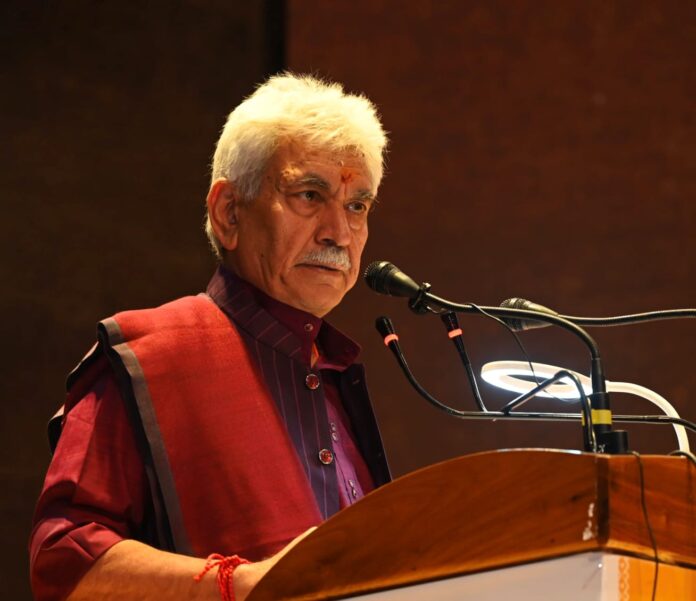
J&K’s 100-Day Anti-Drug Drive a National Model: LG Sinha

Srinagar, Aug 2 (NVI): Lieutenant Governor Manoj Sinha on Sunday said Jammu and Kashmir’s 100-day anti-drug campaign has led to the registration of over 2,300 FIRs, arrest of around 2,600 persons and seizure of nearly 1,500 kilograms of narcotics, asserting that the administration will continue its crackdown on the drug menace while focusing on rehabilitation of victims.

Speaking at the Union Territory-level launch of the “Nasha Mukt Yuva for Viksit Bharat Sankalp Abhiyan” at SKUAST-Kashmir, Sinha said the campaign aims to channel the energy of the country’s youth towards nation-building and healthy living.

The 100-week nationwide campaign was virtually launched by Prime Minister Narendra Modi.

Addressing the gathering, the lieutenant governor said India’s youth population is its greatest strength and called upon young people to actively contribute to building a developed nation.

Highlighting the achievements of the recently concluded 100-day “Nasha Mukt J&K Abhiyan”, Sinha said around 2,300 FIRs were registered, 2,600 persons arrested and 1,500 kg of narcotic substances seized.

He said authorities have also attached 331 properties worth about Rs 200 crore linked to drug smugglers and narco-terror networks, cancelled more than 370 driving licences and 750 vehicle registrations, besides recommending cancellation of nearly 3,000 Aadhaar cards of those allegedly involved in the drug trade.

Sinha said the government would soon roll out the “Rehabilitation and Socio-Economic Reintegration Scheme for Drug Abuse Victims, 2026”, beginning with pilot projects in one district each of Kashmir and Jammu divisions.

The proposed three-year programme will focus on medical treatment, counselling, education, skill development, employment support and long-term reintegration of recovering addicts into society, he said.

Describing drug addiction as both a law-and-order and social challenge, the lieutenant governor urged parents, teachers, youth organisations and volunteers to spread awareness against substance abuse and guide young people towards a healthy lifestyle.

He also administered the “Nasha Mukt Yuva Pledge” to the participants, reaffirming the commitment to making Jammu and Kashmir drug-free.(NVI)

21 Bangladeshi Nationals Held in J&K’s Ramban

J-K Police
Representational image

Shivam Bakshi

Ramban, Aug 2 (NVI): Twenty-one Bangladeshi nationals, including women and minor children, were apprehended by police in Jammu and Kashmir’s Ramban district after they allegedly failed to produce valid travel or identity documents, officials said on Sunday.

The group was intercepted during a checking operation at Banihal on August 1, officials said.

During verification, none of the apprehended persons could produce passports, visas or any other valid documents to establish their lawful entry into or stay in India, they said.

Preliminary questioning revealed that the group had allegedly crossed into India illegally through the Assam border before travelling by train to Jammu. They were reportedly heading towards Kashmir in search of employment, officials said.

The apprehended persons are residents of different areas of Sylhet district in Bangladesh, they added.

Police have initiated legal proceedings and launched a detailed investigation to verify their identities, establish the route they used to enter the country, and ascertain whether any local or cross-border network facilitated their movement, officials said.(NVI)

Security Forces Arrest Alleged OGW, Recover Pistol and Ammunition in J&K Baramulla

File Photo

Srinagar, Aug 2 (NVI): Security forces on Sunday arrested an alleged overground worker (OGW) in Jammu and Kashmir’s Baramulla district and recovered a pistol, ammunition and other incriminating material from his possession, officials said.

They said a joint checkpoint was established at Zandfaran–Goriwan Crossing in the Narwav area by the Army, Special Operations Group (SOG) of J&K Police, CRPF and BSF as part of intensified security measures.

During checking, a man approaching the naka from the Goriwan side allegedly attempted to flee after noticing the security personnel. He was chased and apprehended, the officials said.

A search of the suspect led to the recovery of an MP-5 type pistol, one magazine loaded with 10 live 9 mm rounds, a mobile phone and a black backpack, they added.

The arrested person was identified as Aijaz Ahmad Ganie, a resident of Namblan in Baramulla district.

Police have registered a case under relevant sections of law, and further investigation is underway to ascertain his alleged links and activities, the officials said.—(NVI)

Omar Abdullah invites businesses to J&K

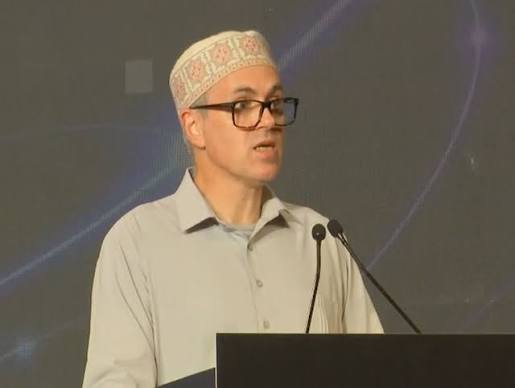
Bengaluru, Aug 1 (NVI) Jammu and Kashmir Chief Minister Omar Abdullah today invited businesses to establish operations in his Union Territory, saying technology had created an opportunity for talented young people to participate in national and global markets without necessarily leaving home.

Speaking at ‘IIMBue 2026’ event here, he asked, “What would you need to see before you put your second centre in a place like ours?”

He said the next transformation of J&K would depend less on government schemes than on whether institutions could inspire confidence and enable thousands of entrepreneurs to build businesses.

He said J&K’s per capita income had grown faster than several northern states over the past five years but remained about Rs 50,000 below the national average, calling for the need to create more private-sector opportunities.

“Our job is to widen access to it as far as we can,” Abdullah said, referring to enterprise.

“Whether any of this succeeds… will be decided by thousands of ordinary decisions, by entrepreneurs who start companies, investors who stay patient, universities that produce talent, young people who decide their future is worth backing.

“The productive assets of the 21st century are no longer land or physical capital. If land was the asset of that age, ours is enterprise,” Abdullah said. “Broadening access to enterprise is the modern equivalent of broadening access to land.”

He talked about J&K’s post-Independence land reforms, saying transferring ownership to cultivators fundamentally changed economic incentives and laid the foundation for improvements in education, healthcare and productivity that followed over subsequent decades.

“Institutions set the incentives. People read them before they invest, before they educate a child, before they take a risk,” he said. “Ownership encouraged investment. Security encouraged productivity.”

He said development was “rarely the consequence of one government or budget” but rather the outcome of institutions that reward ordinary effort over time.

Abdullah added that despite geographical disadvantages such as mountainous terrain, high transport costs and limited industrialisation, J&K has recorded among the highest life expectancy levels in India, arguing that institutions rather than geography explain the difference.

The Chief Minister said decades of militancy necessitated higher public spending on maintaining order.

He described it as “security economy”, where preserving stability took precedence over expansion and private risk-taking.

“Nobody chooses a security economy. It is what rational adaptation looks like when it goes on long enough,” he said. (NVI)

TTP killed 304 Pakistani security personnel, injured 477 in June

TTP
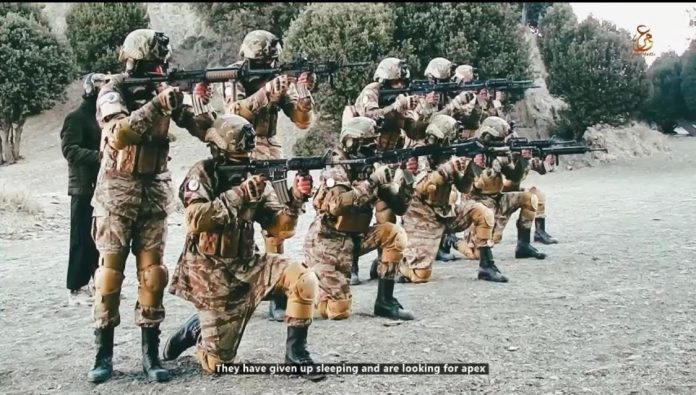
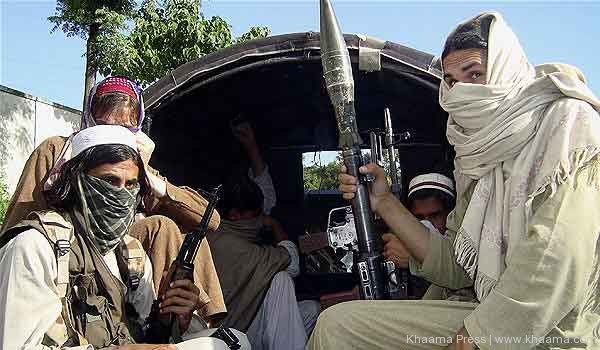
Special squad of Tehreek-e-Taliban Pakistan (TTP) undergoing training. (File Pic)

Peshawar, Aug 1 (NVI) Tehreek-e-Taliban Pakistan (TTP) killed 304 personnel of Pakistani government forces and injured 477 in 315 operations during the month of June in Khyber Pakhtunkhwa Province and some other parts.

At least 68 personnel of the Pakistani forces were captured by the TTP during the month, according to its spokesman who gave details about the operations.

The institutions hit by these operations of the TTP were:

– Police/CTD: 302

– Army/SSG: 211

– Frontier Corps (FC): 177

– Intelligence/Peace Committee: 91

Damage Inflicted:

– Various military vehicles: 44

– Security cameras: 38

– Water, energy, and communication systems: 17

– Military and police installations: 15

– Quadcopter drones: 10

– Tanks and armored vehicles: 6


Types of Operations:

– Guerrilla attacks: 67

– Sniper/Laser attacks: 60

– Direct assaults: 58

– Grenade/Bomb explosions: 51

– Targeted attacks: 31

– Ambushes: 23

– Retaliatory attacks: 17

– Missile attacks: 8


Equipment Seized from Pakistani Forces

– Various firearms: 144

– Various vehicles: 27

– Mobile phones: 3

– Laser rangefinders: 3

– Motorcycles: 2

– Drone jammer: 1

– Various types of ammunition, grenades, ammunition boxes, and other military equipment.

(NVI)

Crackdown in occupied Kashmir exposes Pakistan’s double standards

Body of Kashmiri killed in firing by Pakistani military in POJK

Column

By Khalid Rasool

For decades, Pakistan has stood before the world as the loudest champion of the Kashmiri cause. But in the past two months, the people of Pakistan-occupied Kashmir (POK) have watched that very same State answer their own demand for representation with tear gas, live fire, and silence.

The bloodshed in Rawalakot on the night of July 27, 2026 is not an isolated incident. It is the latest chapter in a story we have been living for years: a State that speaks of self-determination abroad, but meets it with bullets at home.

The Long March that began in Mirpur and converged on Rawalakot was not the work of
foreign-backed agitators, as officials would have the world believe.

It was our march. It was organised by the Joint Awami Action Committee (JAAC), a coalition of ordinary residents who have spent more than a year raising simple, bread-and-butter demands: fair electricity tariffs, wheat subsidies, and an end to a political system that gives twelve seats in the legislature to non-resident refugees while diluting the votes of those who actually live here, pay taxes here, and send their children to schools and hospitals here.

These are not separatist demands. They are the demands of any people who want their voices to count in their own home. A grievance rooted in arithmetic, not ideology.

What JAAC is asking for is far less dramatic than the response it has faced.

Pakistan-occupied Kashmir’s legislative assembly reserves twelve of its seats for refugees who fled Jammu and Kashmir in 1947 and their descendants — many of whom no longer live here at all, having settled permanently elsewhere in Pakistan.

Those of us who live in POK argue that these seats dilute our representation and hand disproportionate influence to a non-resident constituency.

Pakistan’s Supreme Court upheld the constitutional status of these reserved seats earlier this year, a ruling that hardened rather than settled the dispute.

What began as a narrow constitutional argument about apportionment has, over months of stonewalling, grown into a broader movement encompassing electricity tariffs, wheat subsidies, and the release of detained activists — the natural trajectory of any grievance that finds no institutional channel willing to hear it.

A pattern of escalation

The crackdown did not begin in July. Clashes in and around Rawalakot in early June left between eleven and fifteen dead by regional accounts, with further deaths reported the same week in Kotli and Mirpur.

Officials claimed some demonstrators had attacked security personnel and property;
we countered that the security response was disproportionate to anything the protesters had done.

In mid-July, at least nine more people were killed in renewed clashes, including a police officer killed during a raid on a house near Rawalakot. Each round of violence has been followed by the same cycle: talks between JAAC representatives and the government, a breakdown of those talks, and a return to the streets.

That cycle reached its most lethal point yet on July 27, as the long march advanced toward
Muzaffarabad on the same day the first phase of Pakistan-occupied Kashmir’s general election was underway in Mirpur division.

The march had camped on the outskirts of Rawalakot after a midday deadline for the government to meet JAAC’s core demands — release of detained activists, withdrawal of criminal cases, and implementation of commitments made in earlier rounds of talks — passed without agreement.

Thousands then attempted to enter the city on their way toward the regional capital.

Eyewitnesses and JAAC leaders say security forces opened fire on the marchers as they reached Rawalakot that evening.

Organiser figures initially ranged from fourteen to twenty-one killed, but reporting since the crackdown — including Al Jazeera — has said the death toll has risen to 30, with dozens more wounded and hospitals in the city reportedly appealing for blood donors.

Among the dead named by organisers was Usman Nazir, the younger brother of JAAC leader Umar Nazir Kashmiri, whose death became a rallying point for further protest.

Regional police have not confirmed a toll of that scale, and reporting from the broader weeks of unrest has also noted casualties among security personnel — a reminder that the basic facts of the night remain genuinely contested, not merely disputed for political convenience.

A near-total mobile and internet blackout across the region in the days since has made independent verification of the Rawalakot death toll extremely difficult, leaving the world dependent on organiser accounts, official silence, and whatever footage escapes the shutdown.

Timing cannot be ignored

The coincidence of election day and the deadliest night of the crackdown will not be lost on
observers.

JAAC itself was formally proscribed under Pakistan-occupied Kashmir’s Anti-Terrorism
Act in the weeks before the vote, a designation its members reject as a pretext to criminalise dissent rather than a genuine security measure.

A government that bans the territory’s most prominent civil-rights coalition, then holds elections while that coalition’s supporters are being fired upon in the streets, forfeits much of its claim to be conducting a free and fair vote.

Holding elections in the shadow of a banned movement, a communications shutdown, and an unresolved body count raises a question that goes beyond Rawalakot: what democratic legitimacy can any resulting assembly claim, when the loudest political voice in the territory was outlawed and its marchers met with bullets rather than ballots of their own devising — a boycott, in effect, engineered by force rather than choice?

A credibility problem, not just a law-and-order one

Islamabad has built much of its foreign policy around the issue of so-called “self-determination” in Jammu and Kashmir, raising the issue at the United Nations and in bilateral forums with a consistency few other Pakistani foreign-policy positions can match.

That advocacy loses force when the same government cannot tolerate a peaceful march for electoral reform in parts of Jammu and Kashmir on its own side of the Line of Control.

A state’s standing to speak for the rights of Kashmiris elsewhere depends, at minimum, on how it treats the Kashmiris under its own administration.

A double standard does not become defensible merely because it runs in a politically convenient direction.

It is worth stating plainly what fairness requires here: the toll from Rawalakot is disputed, not confirmed by independent inquiry, and Pakistani officials have pointed to casualties among their own security personnel across the months of unrest.

None of that changes the underlying pattern — a civilian political movement met, repeatedly, with lethal force rather than sustained negotiation — but it is a pattern that deserves independent verification, not activist claims alone, before the world renders final judgment on numbers.

What independent verification would actually require

Calling for an impartial inquiry is easy; specifying what it would need to accomplish is harder, and more useful.

It would need access to Rawalakot’s hospitals and their admission logs from the night
of July 27, unmediated by either JAAC or the local administration.

It would need to interview security personnel who were present, not merely read official statements issued after the fact.

It would need the communications blackout lifted long enough for residents to submit testimony without fear that doing so would be traced.

And it would need a mandate broad enough to cover the full arc of the unrest since early June, rather than treating Rawalakot’s worst night as an isolated incident divorced from the pattern that preceded it.

Anything short of that will produce another round of competing press releases rather than an accounting either side can be held to.

An appeal to the United Nations and the world community 

This is not a plea for a new position on the final status of Kashmir. It is a plea for the most basic norms of human rights and democratic governance to be applied without double standards.

The United Nations Human Rights Council and the Office of the High Commissioner for Human Rights have the mandate and the precedent to request an independent, impartial accounting of the Rawalakot deaths — one that does not depend on either JAAC’s figures or the government’s silence.

Election observers who monitored the July 27 vote should be asked, publicly and on the
record, what they saw and did not see that day in the districts nearest the violence.

The people of Pakistan-occupied Kashmir are not asking the world to redraw maps. We are asking it to see us: to ensure that a government cannot fire on unarmed civilians and then black out the phones so the world cannot count the bodies.

That principle applies in Rawalakot exactly as it would apply anywhere else, regardless of which government’s flag flies over the district headquarters.

The argument Pakistan cannot win by force

Political legitimacy is not manufactured through communications blackouts and proscription
orders. It is built through dialogue, a transparent accounting of the dead, and a willingness to let a banned committee argue its case in an assembly hall instead of a street under fire.

The people who marched from Mirpur to Rawalakot were not asking for the map to be redrawn.

They were asking to be represented on it — a narrower, more modest demand than the one Pakistan makes on their behalf at the United Nations every year.

A government that answers that request with gunfire, and then shuts down the phones so the world cannot verify the body count, has already conceded the argument it claims to be winning.

To the United Nations and the world community: if the language of human rights means anything, it must mean something here too.

Help the voiceless people of POK be heard, before more nights like July 27 become the only history we are allowed to remember.

Ends

Indian Army, Rajasthan Police Seize Counterfeit Combat Uniform Cloth in Rajasthan

Jaipur, Aug 1 (NVI): The Indian Army and Rajasthan Police have busted an alleged counterfeit combat uniform racket in Rajasthan’s Sriganganagar district, seizing nearly 1,000 metres of unauthorised Army-pattern combat cloth during a joint operation, officials said on Saturday.

The operation was launched following the seizure of similar counterfeit combat cloth in Bareilly in June, which was traced to a manufacturing source in Sriganganagar, they said.

Army intelligence units carried out a discreet inquiry that allegedly identified a local firm as a key supplier of counterfeit Army-pattern combat cloth to shops in Sriganganagar town and nearby areas, including Lalgarh Jattan and Suratgarh.

Based on the findings, an interim investigation report was shared with Rajasthan Police in mid-July, following which joint teams conducted searches at multiple shops across the district on July 30.

During the raids, around 1,000 metres of unauthorised Army-pattern combat cloth of the new design was seized, officials said.

They said the unauthorised possession, sale or use of military-pattern combat cloth is a punishable offence and poses a security risk as it could facilitate impersonation of armed forces personnel.

Further investigation is underway to identify others involved in the alleged supply network, officials added.(NVI)

Centre Releases Rs 1.09 Lakh Cr Tax Devolution to States

Import duty

New Delhi, Aug 1 (NVI): The central government has released an additional Rs 1.09 lakh crore as tax devolution to state governments, over and above the regular monthly transfer scheduled later this month.

The advance release will provide states with additional financial resources ahead of the normal devolution cycle, said a statement issued by the Union Finance Ministry.

It said Rs 1,09,019 crore was released today and that the amount is in addition to the normal monthly tax devolution, which is scheduled to be released on August 10.

Tax devolution is the Centre’s transfer of a share of its divisible tax pool to states based on the recommendations of the Finance Commission. Under the current arrangement, states receive 41 per cent of the Centre’s divisible tax pool.

The devolution is generally released in 14 instalments during a financial year. The additional release means states will receive the advance instalment now, while the regular monthly devolution for August will continue as scheduled on 10 August.

The move is expected to improve the cash position of state governments, enabling them to meet expenditure requirements and continue implementation of development and welfare programmes without waiting for the scheduled monthly transfer. (NVI)

Pakistan: TTP claims killing, injuring 77 security personnel in 3 days

Fighters of Tehreek-e-Taliban Pakistan (TTP). File Pic

Peshawar, Aug 1 (NVI) Tehreek-e-Taliban Pakistan (TTP) today claimed to have killed and injured at least 77 personnel of Pakistani forces in various operations in a span of three days.

At least 7 police personnel were also captured by the TTP and they were released today.

The biggest attack was carried out three days back on a facility of police in Hangu in Orakzai district of Khyber Pakhtunkhwa Province.

In the attack and a subsequent ambush on reinforcements, 12 police personnel were killed and 28 injured, TTP said in a statement.

The killed personnel included a Deputy Superindendent of Police.

It said 18 personnel at the post surrendered to the militants during the attack and were later released on the guarantee of local elders.

In the subsequent ambush, seven police personnel were captured alive. They were released today.

The TTP also seized a large quantity of arms and ammunition, which included 56 Kalashnikov rifles, 3 DShK heavy machine guns, 5 rocket launchers, 3 laser rangefinders, 5 PK machine guns, 2 MG-1 machine guns, 6 boxes of Kalashnikov ammunition, 8 boxes of MG-1 ammunition, 15 rocket launcher rounds, 13 grenades, 4 pistols and 2 sniper rifles.

A total of seven vehicles were destroyed during the clashes.

“The operation was carried out in retaliation for the alleged desecration of the bodies of their Mujahideens in Tank Province a few days earlier. We value the sacrifices of our martyrs and threatening severe retaliation if such alleged desecration occurs again,” TTP spokesman said.

Another major attack was witnessed in North Waziristan Province, where the TTP ambushed a military convoy of eight vehicles in Shawal district from a distance of 10 meters.

The ambush resulted in the killing and injuries to 30 personnel of the Pakistan army, the spokesman said, adding the vehicles suffered severe damage.

In Swat district, the TTP carried out a big attack on police and Counter-Terrorism Deparment (CTD) personnel in Matta, which resulted in the killing of 10 security personnel and injuries to several others.

“After intense fighting, the enemy personnel fled, leaving behind the bodies of their colleagues on the battlefield,” the TTP spokesman said.

The TTP seized four Kalashnikov rifles, one pistol, three mobile phones, and other equipment from the dead personnel, he added.

In Dera Ismail Khan district, four police personnel were killed and two injured in an ambush.

One Kalashnikov rifle and one motorcycle were also seized from the personnel.

In Tank district, the Pakistani military raided the TTP, which retaliated, the spokesman said.

The clash left one army soldier dead and several wounded, he added.

TTP also killed a CTD operative who was wanted for allegedly poisoning the Mujahideen in Peshawar. (NVI)

MUST READ