Thursday, September 10, 2026
Home Blog Page 1019

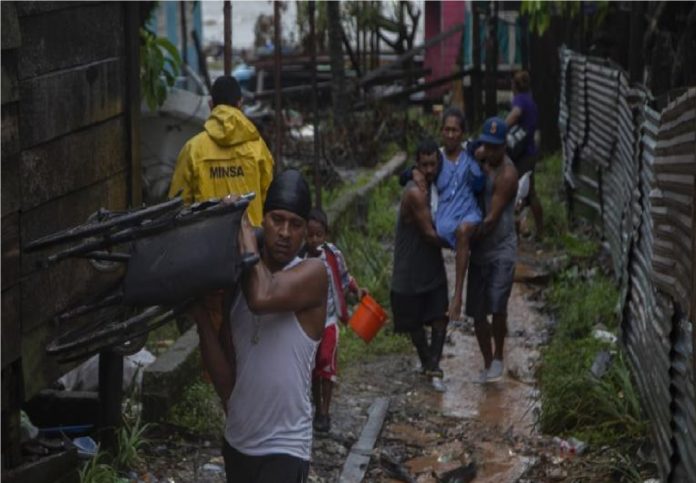
Category 4 Hurricane Iota makes landfall in Central America’s Nicaragua

New Delhi (NVI): Hurricane Iota made landfall in Nicaragua on Monday night, as a Category 4 hurricane after battering the Colombian islands of San Andres and Providencia.

The storm made landfall near the town of Haulover, with sustained winds near 155 mph, according to an advisory from the National Hurricane Center.

Hurricane Iota’s landfall location is approximately 15 miles south of where Hurricane Eta made landfall as a Category 4 hurricane on November 3.

The storm is expected to move inland across northern Nicaragua and southern Honduras till midnight.

A hurricane warning is in effect for the coast of Nicaragua from the Honduras/Nicaragua border to Sandy Bay Sirpi, and the northeastern coast of Honduras from Punta Patuca to the Nicaragua border, according to the hurricane center.

The National Hurricane Center has warned of “flash flooding, life-threatening storm surge, and powerful winds” across Central America from the latest storm.

Iota first impacted the islands of San Andres and Providencia, which have been part of Colombia for centuries, but are geographically closer to Central America than to the Colombian mainland.

A tropical storm warning is in effect for Providencia, while San Andres is under a hurricane watch, the hurricane center said.

Before it weakened, Iota was the first Category 5 storm of this record-breaking hurricane season and is threatening many areas of Central America that are still recovering from the devastating effects of Hurricane Eta.

Iota will weaken rapidly after landfall and is forecast to dissipate over Central America by Wednesday, the advisory said.

Furthermore, hurricane and tropical storm warnings are also in effect for surrounding area.

Meanwhile, rainfall accumulations throughout Central America are expected to be high, with Honduras, northern Nicaragua, Guatemala and southern Belize seeing between 8 and 16 inches of rainfall, according to the advisory.

Costa Rica and Panama should also see about 4 to 8 inches of rainfall, with up to 12 inches possible in some areas.

-CHK

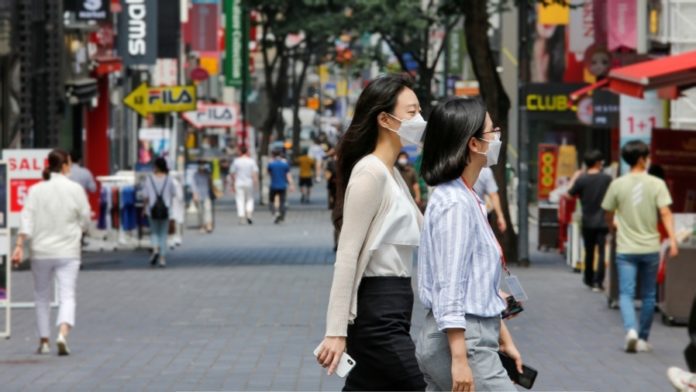
South Korea to tighten social distancing rules as COVID cases surge

South Korea to tighten social distancing rules as COVID cases surge
Representational image

New Delhi (NVI): The South Korea government has decided to strengthen its social distancing measures following a recent resurgence in COVID-19 cases in the country.

The government will raise its social distancing rules one level in the greater Seoul area and surrounding areas a month after easing them, to be effective starting from Thursday, according to the reports.

Moreover, the decision was announced at a COVID-19 countermeasure meeting with health officials in response to a recent spike in cases.

As per the reports, the new restrictions will ban public gatherings at concerts and festivals with 100 or more people and limit sports events to 30 percent capacity. Also, require high-risk facilities including clubs and karaoke bars to broaden distance among guests.

The announcement of new restrictions came as the country has reported more than 200 new daily cases, mainly in the greater Seoul area, for four straight days through Monday.

Furthermore, the new rules also ban dancing and moving to others’ seats at nightclubs and other high-risk entertainment facilities, even drinking and eating at karaoke rooms and concert halls is prohibited.

South Korean Prime Minister Chung Sye-kyun warned that action was needed to avoid a crisis with the arrival of the winter flu season. “Our anti-coronavirus efforts are facing a crisis and the situation is particularly serious in the Seoul metropolitan area,” the prime minister said in a meeting.

He added that, “Today’s decision will cause greater inconvenience in our daily lives. But we all know from experience that there will be an even bigger crisis if we don’t act now.”

The country added 230 more cases in past 24 hours raising the total to 28,999, according to the Korea Disease Control and Prevention Agency (KDCA), while the death toll stood at 494 in South Korea, it added.

Earlier, KDCA director Jeong Eun-kyeong also warned that the daily COVID-19 tally could go as high as 400 in coming weeks, asking citizens to stick to hygiene rules and minimize year-end celebrations.

-RJV

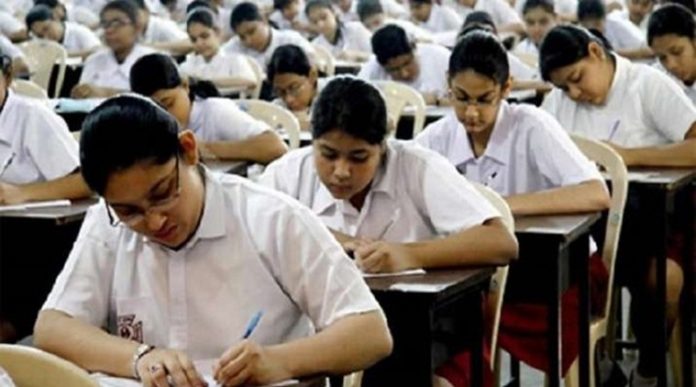
Students await CBSE exam dates 2021

CBSE
(File/Representational Image)

New Delhi (NVI): All eyes are on the Central Board of Secondary Education for the announcement of board exam dates for Class 10 and 12 after Gujarat and Maharashtra have decided to postpone these exams in the wake of the coronavirus pandemic.

Students, parents as well as various stakeholders are now expecting a similar decision by the CBSE which conducts board exams for lakhs of Class 10th and 12th students in the country every year. The board exams are normally conducted in the months of February and May.

However, Gujarat and Maharashtra have decided to conduct the exams in May 2021.

Last month, CBSE and CISCE had said that they are planning to either postpone the exams or cut the syllabus – or choose a combination thereof.

-ARK

One year of coronavirus: How the pandemic has unfolded and what’s next

New Delhi (NVI): It was on this very day in 2019, the first case of coronavirus was reported in the Chinese city of Wuhan, which marked the starting of a pandemic, not seen since the Spanish flu over a century ago.

Following the outbreak, the world was plunged into a crisis that triggered financial turmoil among sectors across the globe, that rendered millions of people jobless in the months that followed.

In March, the South China Morning Post published an article based on Chinese government data that showed the first known case of COVID-19 can be traced back to November 17, 2019 — possibly a 55-year-old individual from Hubei province, although “patient zero” is yet to be confirmed.

Furthermore, on January 11, a 61-year-old man with severe underlying health conditions became the first confirmed death from the new virus.

However, Chinese authorities did not officially identify the first case of the new disease until December 8, 2019.

Initial reports put the source of the pandemic down to a live animal wet market – the Huanan Seafood Wholesale Market – but the cause is still unknown.

According to the Chinese CDC, initial laboratory tests from patients suffering from the viral pneumonia were negative for 26 common respiratory pathogens. It was not until January 7 that Chinese scientists confirmed that a novel coronavirus, dubbed 2019-nCoV, was the cause of the mysterious outbreak.

Over the course of January, international media took an increasing interest in the growing coronavirus outbreak as the virus spread around the world.

On January 12, China publicly shared the genetic sequence of the novel coronavirus. And just a day later, officials in Thailand confirmed a case of COVID-19—the first outside China itself.

By January 20, the virus had spread all around China and to a handful of other countries including Japan, Thailand, South Korea and the United States, as governments scrambled to respond to the outbreak.

On January 30, the first case of COVID-19 was reported in Kerala, India.

Notably, the coronavirus outbreak was declared a Public Health Emergency of International Concern in January 2020, and a pandemic in March 2020, by the World Health Organization (WHO).

The outbreak of the pandemic has changed the scenario across the world. Several countries had to enforce a lockdown to control the pandemic.

The hunt for a vaccine too has been a long one. On Monday, US-based biotechnology giant Moderna announced that its COVID-19 vaccine has shown to be 94.5 per cent effective in preventing the deadly disease, bringing a glimmer of hope to a world ravaged by the pandemic.

Long before the COVID-19 outbreak started, experts had been warning of the risks of a deadly global pandemic. In September 2019, shortly before the novel coronavirus emerged, a team of international scientists said in a report that efforts to prepare for such an event were “grossly insufficient.”

US, India and Brazil remain the worst affected countries respectively in terms of number of cases and fatalities caused by the deadly contagion.

Although countries around the world are engaged in developing effective vaccines for the novel coronavirus, it is still uncertain as to when will a vaccine be made available.

In the meantime, only one thing is certain: COVID-19 is not done with us yet.

The virus has now claimed the lives of more than 1.2 million people worldwide, with cases surpassing 50 million in 190 countries.

-CHK/ARK

Pakistan Army again comes out with ‘India-phobia’ card

Pakistan Army again comes out with 'India-phobia' card

COLUMN

“Yeh jo dehshatgardi hai, iske peeche vardi hai (Pakistan military is behind terrorism in Pakistan).” One often gets to hear these chants at public rallies and elsewhere in Pakistan, highlighting the fact that the all-powerful military indulges in state terrorism in the country and coerces the civilian authority into subjugation.

It is no secret that Pakistan Army has never allowed any civilian government in the country to function properly and leaders who dared to disobey the military dictates have been dethroned, either through coup or by slapping false cases against them. Pakistan has a sad history of no elected government being allowed by the military to complete its full five-year term.

It is also no secret that Pakistan’s notorious intelligence agency – Inter-Services Intelligence (ISI) – is used by the Army as a tool to create an atmosphere of fear within the country through targeted killings and ‘enforced disappearances’.

These facts may have been understated all these decades but lately Pakistan has been witnessing a popular uprising of sorts against the Army, under the garb of unhappiness against its proxy – the ‘selected’ government of Imran Khan.

Voices of protest against the Pakistan Army are amplifying rapidly and across the country, indicating that the people want to break the shackles of the military. Such is the state of affairs in Pakistan that even renowned journalists like Matiullah Jan are abducted in broad daylight in the heart of Pakistan’s capital Islamabad by the ISI men for speaking against the Army.

It was Matiullah Jan’s sheer good luck that his abduction was caught on camera, placed at the gate of a nearby school, and there was immediate uproar, forcing the ‘deep state’ to release him by the night of the same day – July 21. Otherwise, Jan would have joined many, like journalist Tanveer Ahmed of Pakistan-occupied Kashmir who remains missing after being abducted on August 21, or others who return only in the form of dead bodies.

After his release, Matiullah Jan issued a video statement, in which he openly said that his abduction was carried out by the ‘state agencies’ and that they have caused huge destruction of Pakistan.

Fed up with the military’s machinations, 11 opposition parties of Pakistan have come together under the banner of Pakistan Democratic Movement (PDM), with an aim of establishing the “real democracy” in the country, where the Army will have no role in politics.

Over the last month, the PDM has organised massive rallies at various places across Pakistan. Patronised by former three-time Prime Minister Nawaz Sharif, the PDM is being steered on the ground by his daughter Maryam Nawaz along with Pakistan People’s Party (PPP) leader Bilawal Bhutto, son of late Prime Minister Benazir Bhutto.

Significantly, Sharif’s Pakistan Muslim League-Nawaz (PML-N) and PPP have been arch political rivals who have joined hands with an aim of ousting the “selected” Imran Khan government.

The PDM rallies in Gujranwala (in Punjab Province on October 16), Karachi (in Sindh Province on October 18) and Quetta (in restive Balochistan Province on October 25) saw huge public turnout and unprecedented direct attack on the omnipotent Army Chief Gen Qamar Bajwa and his clan for unleashing state terrorism on the people of the country and suppressing civil institutions.

There was an attempt to scuttle the rally in Quetta with a bomb explosion being carried out, suspectedly by the ‘agencies’. But the PDM was not dissuaded and rally was organised, during which Army came under attack for ‘enforce disappearances’ and other illegal activities.

Sharif, who addressed these rallies from London via video conference, directly named Gen Bajwa for toppling his duly-elected government by foisting false corruption charges to install a ‘selected’ government of Imran Khan in 2018.

The PDM, which continues to gain popular support reflecting resentment against the Army in an unprecedented manner, has vowed to step up the momentum to establish the civilian supremacy in the country. More rallies are lined up in the near future — Peshawar on November 22, Multan on November 30, Lahore on December 13 and Larkana on December 27, the final one this year.

If the PDM was not enough, Pashtus or Pathans have also ventured onto a mass movement against “state terrorism” in Khyber Pakhtunkhwa Province.

The Pashtun Tahaffuz Movement (PTM) has been undertaking a campaign under the banner of ‘Pashtun Long March’ against atrocities being committed the Army and intelligence agencies, like targeted killings and enforced disappearances.

These developments have clearly unnerved the Pakistan Army, which is the real force behind the Imran Khan government, and hence it played its much-used ‘India card’. This is the backdrop against which the Imran Khan government, at the behest of Army, came out with absurd allegations against India that it is “fanning terrorism” in that country.

The ‘India phobia’ card has been played as a desperate attempt to ease the mounting pressure on the Imran Khan government and through it, on the Army.

The attempt clearly is to fuel nationalistic jingoism in Pakistan and divert attention of the people from the resentment against the Army and its misdeeds, reflected in the growing civil movement.

Khan and his ministers have already tried to defame the PDM by labelling them as “Indian agents”. The ministers have also issued veiled threats to them by saying “political leaders could be assassinated”.

The Imran Khan government claims the assassinations could be engineered by India. This claim serves two purposes for the Pakistan Army and its proxy government – eliminate opposition leaders raising voice against the military and put the blame on India, to turn the tide in its favour. 

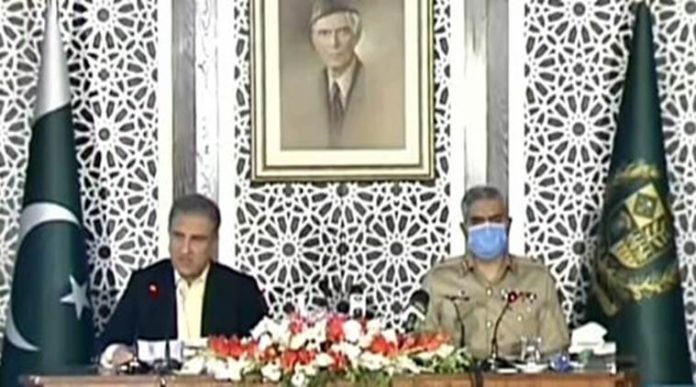
Interestingly, Pakistan Foreign Minister Shah Mehmood Qureshi levelled the allegations against India while sharing the podium with Director General of Inter-Services Public Relations (ISPR), who is the military spokesperson. That in itself speaks volumes about the state of affairs in Pakistan. Can anyone imagine a military spokesman sharing podium with the Foreign Minister at an official press briefing in any democratic country?

So, while Qureshi said he wanted to “show the real face of India to the world”, he himself could not hide “the real face of Pakistan” where a Foreign Minister can’t even address a press conference without direct supervision of the military.

A glaring example of how the military in Pakistan has converted all civilian institutions of the country into a joke was the abduction of a police officer of the rank of IGP of Karachi on October 18 by the armed forces personnel and coercing him to sign arrest warrant against son-in-law of Nawaz Sharif. This led to a revolt by the Sindh police whose entire brass opted to go on long leave in protest against the “humiliation” meted out to the force by the Pakistani military.

Although Gen Bajwa ensured that the protest was withdrawn by his assurance of a “fair” probe, the discontent persists within the civilian institutions across the country.

Anurag Srivastava, Spokesperson of Indian External Affairs Ministry, aptly described the allegations by Qureshi as a “deliberate attempt on the part of the Pakistani establishment to shift focus from its internal political and economic failures”.

Describing the press conference by the Pakistani establishment as “yet another futile anti-India propaganda exercise”, he said, “The so-called claims of ‘proof’ against India enjoy no credibility, are fabricated and represent figments of imagination.”

He asserted that “this desperate attempt (of Pakistan) will find few takers as the international community is aware of Pakistan’s tactics and proof of its terror sponsorship has been admitted by none other than its own leadership.”

Srivastava said “concocting documents and peddling false narratives will not absolve Pakistan” which is known as a producer of terrorists, because of whom not only India, but other neighbours are also suffering.

Leaders of Baloch groups, who are fighting for liberation from Pakistani occupation, have also rubbished Pakistan’s claims about receiving support from India.

Terming the allegations as “black propaganda”, they said if the Baloch had “foreign financial aid and military support, the situation would have been different” and cited the example of how Bangladesh was liberated after India provided assistance.

“The Pakistani Foreign Minister and the ISPR are using such tactics to boost the morale of their army and mislead the masses,” tweeted Baloch leader Dr Allah Nizar Baloch.

This observation is absolutely correct. While many people in Pakistan could be fooled by the Army as they have been earlier, the international community will surely offer only rebuff to Pakistan, like it did over its cries and wailing over the abolition of Article 370 in Jammu and Kashmir in August last year.


SC quashes plea seeking waiver of exam fees for CBSE Class 10, 12 students

Supreme Court

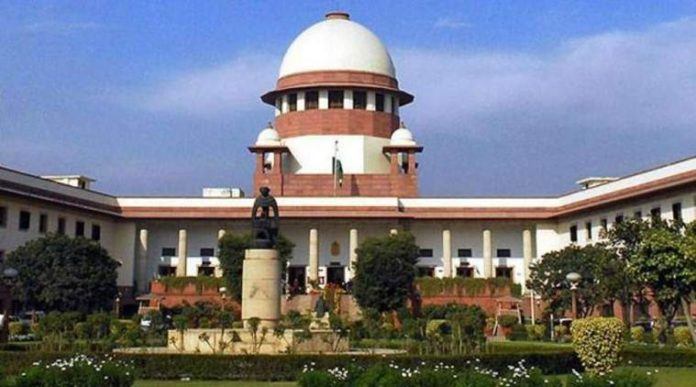
New Delhi (NVI): The Supreme Court today dismissed a plea seeking direction to the Central Board of Secondary Education (CBSE) and Delhi government for waiving exam fees for students of class 10th and 12 in the current academic year in the wake of the coronavirus pandemic and financial crunch faced by some parents due to it.

The petition, filed by NGO ‘Social Jurist’, against the September 28 order of the Delhi High Court was dismissed by a bench of Justices Ashok Bhushan, R Subhash Reddy and MR Shah.

The bench also directed the counsel to approach appropriate authority in this regard.

Earlier, the Delhi high court had asked the AAP government and the CBSE to treat the PIL as a representation and take a decision “in accordance with law, rules, regulations and government policy applicable to the facts of the case” within three weeks.

-ARK

PM to address 3rd Bloomberg New Economy Forum today

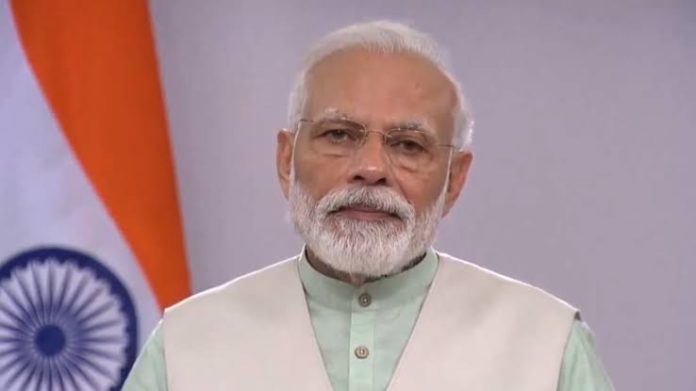
New Delhi (NVI): Prime Minister Narendra Modi will deliver an address at the 3rd Bloomberg New Economy Forum today at around 6:30 pm.

The forum will witness discussions centered on refuelling the economy and charting a course for the future as the global economy is grappling with the COVID-19 pandemic, the Prime Minister’s Office (PMO) said in a statement.

The Bloomberg New Economy Forum was established in 2018 by Michael Bloomberg. It seeks to build a community of leaders to engage in real conversations leading to actionable solutions about the critical challenges facing a world economy.

The inaugural forum was held in Singapore, followed by a second annual Forum was hosted in Beijing, the statement further said.

These covered a range of topics, including global economic management, trade and investment, technology, urbanization, capital markets, climate change, and inclusion, it added.

-RJV


Delhi govt seeks to shut markets emerging as Covid-19 hotspots

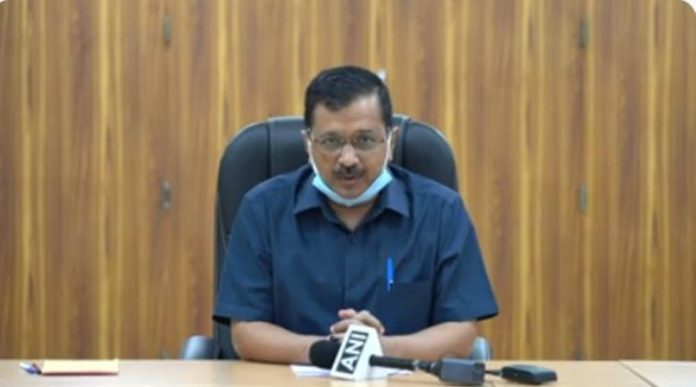
New Delhi (NVI): Amid spike in Covid-19 cases in Delhi, Chief Minister Arvind Kejriwal is planning to shut down markets if there is a massive violation of Covid-19 safety norms and have the potential of becoming local COVID-19 hotspots.

While addressing a press conference today, CM Kejriwal said that his government will send a proposal in this regard to the Centre.

“Will send a proposal to the central government for permission to close markets for few days where norms are not being followed and have the potential of becoming Covid-19 hotspots,” the chief minister said.

In addition to this, Kejriwal is also looking at reducing the number of people allowed for public gatherings back to 50 from 200.

“In keeping with the Central government guidelines, Delhi had allowed up to 200 people at weddings. But now we have decided to go back to the earlier limit of 50 people,” Delhi CM said.

“I have sent a proposal to the Lieutenant Governor for approval. I hope he gives permission soon,” Kejriwal said observing that many weren’t wearing masks on Diwali or distancing while shopping.

Kejriwal added that the Delhi government, Centre and all other agencies are making ‘double efforts’ to control COVID-19 situation in the national capital.

“I appeal to Delhiites with folded hands to wear masks and follow social distancing norms,” said CM Kejriwal.

With Delhi witnessing a fresh spike in the number of COVID-19 cases, the Centre on Sunday announced a slew of steps, including making available 300 additional ICU beds, doubling the number of daily PCR tests and a house-to-house survey in the national capital.

So far, Delhi has recorded more than 4.89 lakh cases of coronavirus. Of this over 7,600 are deaths linked to the virus. The active caseload has crossed 40,000, which was below 10,000 in the month of August.

-CHK

WHO launches global strategy to eliminate cervical cancer

cancer
1 out of 6 people lose their lives due to cancer every year globally

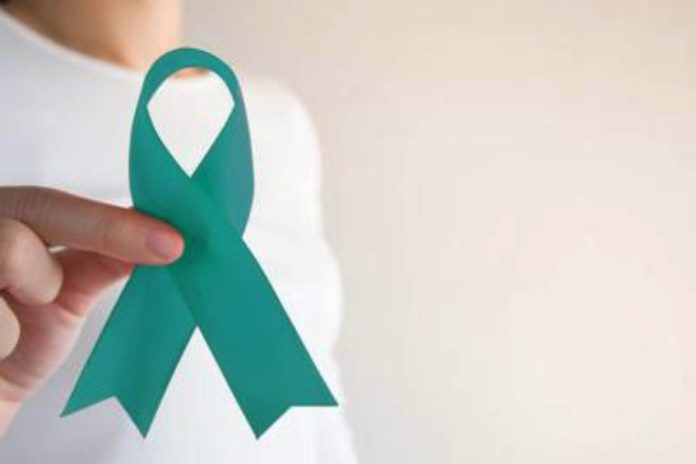
New Delhi (NVI): The World Health Organization (WHO) has launched a global strategy to eliminate cervical cancer from around the world, which could save five million lives among women and girls by 2050.

The WHO‘s Global Strategy to Accelerate the Elimination of Cervical Cancer, outlined three key steps—vaccination, screening and treatment and implementation of all three could reduce more than 40 per cent of new cases of the disease and 5 million related deaths by 2050.

“Eliminating any cancer would have once seemed an impossible dream, but we now have the cost-effective, evidence-based tools to make that dream a reality,” WHO director-general Tedros Adhanom Ghebreyesus said in a statement.

“But we can only eliminate cervical cancer as a public health problem if we match the power of the tools we have with unrelenting determination to scale up their use globally,” Tedros added.

During the World Health Assembly annual meeting last week, all 194 member countries agreed to a plan towards eliminating the cancer.

They involved strategy which include vaccination of 90 per cent of girls with the HPV vaccine by 15 years of age, screening of 70 per cent of women using a high-performance test by age 35 and again by 45 and treating 90 per cent of women identified with cervical disease, the WHO said.

The strategy also stressed upon investing in the interventions to meet these targets that can generate substantial economic and societal returns. In addition, WHO estimates that USD 3.20 will be returned to the economy for every dollar invested through 2050 and beyond, owing to increases in women’s workforce participation.

Cervical cancer is the fourth most common cancer among women globally which is a preventable disease. It is curable if detected early and adequately treated.

According to the WHO latest figures, the annual global cases of cervical cancer could increase from 5,70,000 to 7,00,000 between 2018 and 2030, while deaths could increase from 3,11,000 to 4,00,00 during the same timeframe.

In low- and middle-income countries, its incidence is nearly twice as high and its death rates three times as high as those in high-income countries.

“The huge burden of mortality related to cervical cancer is a consequence of decades of neglect by the global health community. However, the script can be rewritten,” said WHO Assistant Director-General Dr Princess Nothemba (Nono) Simelela.

She added that, “The fight against cervical cancer is also a fight for women’s rights: the unnecessary suffering caused by this preventable disease reflects the injustices that uniquely affect women’s health around the world.”

WHO further said that its new strategy comes at a challenging time with world focused on battling COVID-19 pandemic which has posed challenges to preventing deaths due to cancer.

The coronavirus has interrupted vaccination, screening and treatment services, while border closures have reduced the availability of supplies. However, WHO urges all countries to ensure that all three steps for cervical cancer can continue safely, with all necessary precautions.

-RJV

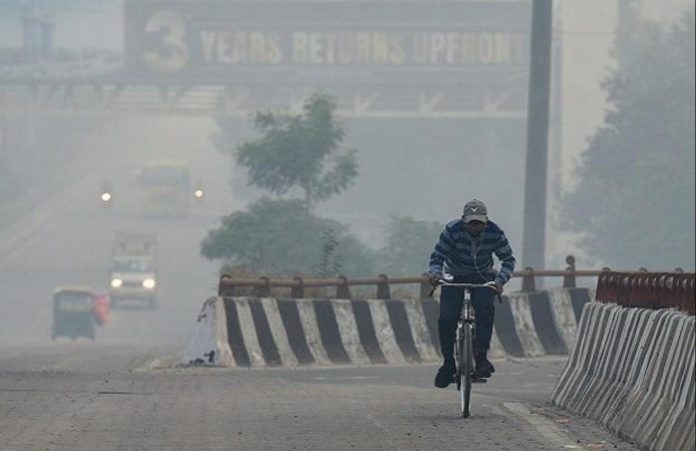
Relief for Delhi as air quality improves to ‘moderate’ level

Relief for Delhi as air quality improves to 'moderate' level
(Representational/file photo)

New Delhi (NVI): The air quality in the national capital and nearby areas improved to “moderate” from “severe” this morning after pollution levels in the atmosphere dipped, the Central Pollution Control Board (CPCB) said.

This improvement in air quality was seen two days after the Delhi-NCR region received a surprise shower, cool surface wind and relatively less stubble burning activity in the surrounding of the national capital.

According to the CPCB data, the air quality index (AQI) in the national capital improved to 169 at around 9 am, which falls in the ‘moderate’ category. The AQI in neighbouring cities of Faridabad (175), Ghaziabad (148), Gurgaon (204) and Noida (182), was also recorded in ‘poor’ and ‘moderate’ categories.

An AQI between 0-50 is marked good, 51-100 is satisfactory, 101-200 is moderate, 201-300 is poor, 301-400 is very poor and 401-500 is considered severe.

However, the Delhi-NCR region witnessed a thin layer of smog this morning, reducing visibility in various parts of the city.

Officials at air monitoring agency said that the air quality in Delhi-NCR is expected to remain in the ‘moderate’ and ‘poor’ categories for the next two days.

Meanwhile, the Indian Meteorological Department (IMD) said, another western disturbance might cause rain in the region around November 18-19.

-RJV

MUST READ