Thursday, September 10, 2026
Home Blog Page 1050

Kerala to reopen beaches from tmrw

New Delhi (NVI): After months of closure due to COVID-19 pandemic, the beaches in Kerala are set to reopen for visitors from tomorrow.

The state government had decided to open the tourism centres in Kerala in two phases.

Earlier, the hill stations, adventure resorts and backwater tourism centres were reopened in the first phase, while under the second phase, the beach tourism will reopen from November 1.

The travellers will have to follow all the COVID-19 guidelines strictly while visiting the tourist spots and beaches in the state. Also, wearing of face masks and social distancing is mandatory.

Under the guidelines, tourists entering Kerala for short trips spanning less than 7 days do not need a coronavirus negative certificate.

Notably, during this period of pandemic, only domestic tourists are allowed to the beach resorts though it was used to be preferred by foreign tourists more.

So far, Kerala has recorded 4,25,122 coronavirus cases, while the death toll stands at 1,457 in the southern state.

-RJV

Odisha schools to reopen from Nov 16

Noida
File photo

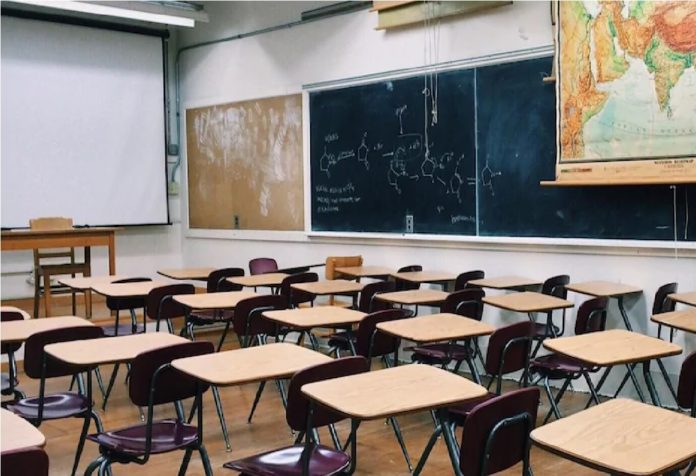
New Delhi (NVI): Classes for students from 9th to 12th will begin from November 16 as per guidelines/standard operating procedure to be issued by the School and Mass Education department.

All academic institutions across the state, however, would remain closed till November 30.

“The classes of 9th to 12th standard in schools under control of School and Mass Education Department will open from November 16 as per guidelines or standard operating procedure (SOP) to be issued by the department,” says the revised guideline issued by the Special Relief Commissioner for the month of November today.

The order said notwithstanding closure of academic institutions, the authorities are permitted to conduct examinations (academic, competitive and entrance tests), evaluation and other administrative activities.

The Odisha government has allowed partial reopening of schools after a steady decline in COVID-19 cases over the last few weeks.

Academic institutions, including coaching centres, have been closed since March in view of the Covid-19 pandemic.

-CHK

Delhi witnesses coldest October in 58 years: IMD

Cold
Representational/file image

New Delhi (NVI): The month of October has been recorded as the coldest in 58 years in the national capital, according to India Meteorological Department (IMD).

IMD stated that the mean minimum temperature in October in 2020 was 17.2 degrees Celsius, which is the lowest since 1962, when it was recorded at 16.9 degrees Celsius.

Normally, Delhi records a mean minimum temperature of 19.1 degrees Celsius in October.

Meanwhile on Thursday, Delhi recorded a minimum temperature of 12.5 degrees Celsius – the lowest in the month of October in 26 years. Delhi last recorded such a low temperature in 1994 when it was 12.3 degrees Celsius.

According to IMD data, the normal minimum temperature for this time of the year is 15-16 degrees Celsius.

The absence of cloud cover is a major reason for such low minimum temperatures this time, IMD’s head Kuldeep Srivastava said.

“Clouds trap some of the outgoing infrared radiation and radiate it back downward, warming the ground,” he said, adding, “Another reason is calm winds, which allow formation of mist and fog.”

Winter season mostly depends on western disturbances. When western disturbance approaches northwest India, winter commences.

-CHK

PM Modi inaugurates India’s first seaplane service in Gujarat

Seaplane service is expected draw a large number of tourists

New Delhi (NVI): Prime Minister Narendra Modi today inaugurated India’s first-ever seaplane service connecting Statue of Unity in Kevadia with Sabarmati Riverfront in Ahmedabad.

After the inauguration, PM Modi boarded the flight from Kevadia on the second and last day of his Gujarat visit and from there, he reached the Sabarmati riverfront.

The seaplane service covers the distance of two hundred kilometers between Kevadia and Sabarmati which will be covered in just 45 minutes by the seaplane.

This service is expected to boost travel and tourism and provide last-mile connectivity.

“Seaplanes have the ability to land and take-off from water thus offering access to areas that do not have landing strips or runways,” Prime Minister’s Office said in a statement.

It can also help in connecting the geographies and regions that have challenges owing to its topography and bring the remotest parts of India into the mainstream aviation network without the high cost of building airports and runways.

These smaller fixed wing airplanes can land on water bodies like lakes, backwaters and dams, gravel and grass, thus offering easy access to numerous tourist spots as well, PMO said.

Earlier in the day, the Prime Minister during his address on Sardar Vallabhai Patel’s 145th birth anniversary said, “Today, seaplane service from Sardar Sarovar to Sabarmati riverfront is also going to be launched.”

“The countrymen will now also have an option of seaplane service. All these efforts are going to give a big boost to tourism in this area,” he added.

-RJV

Greenland ice melt is changing the shape of its coast: Study

Greenland is losing 500 gigatons of ice each year

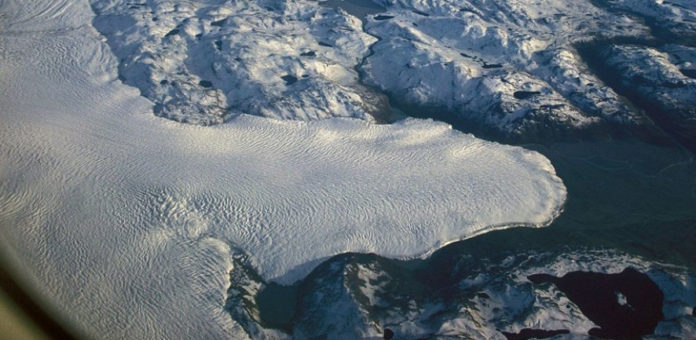
New Delhi (NVI): The rapid melt of ice from the Greenland Ice Sheet has accelerated over the past two decades, transforming the shape of the coastal Greenland, according to a new study.

The study by the National Snow and Ice Data Center (NSIDC) informed that these changes to the ice sheet could have far-reaching impacts on ecosystems and communities along the country’s coast.

Researchers found that the ice retreat in Greenland has changed the way glaciers flow and where they dump into the sea. These changes could impact ice loss from Greenland in the future.

The study led by NSIDC research scientist Twila Moon, compiled data from NASA, the United States Geological Survey and other satellites from 1985 to 2015 to compare ice edge position, ice sheet surface elevation, and glacier flow over the decades.

It showed that Greenland is losing 500 gigatons of ice each year, more than can be replenished by new snowfall.

Meanwhile, the annual ice loss is 14 percent greater today than it was between 1985 and 1999 and the meltwater from this ice loss is lubricating the ice sheet so that it slides more easily on its underlying bedrock, hastening the continued melt.

Moon said, “The speed of ice loss in Greenland is stunning. “We can now see many signs of a transformed landscape from space. And as the ice sheet edge responds to rapid ice loss, the character and behavior of the system as a whole is changing, with the potential to influence ecosystems and people who depend on them.”

The team of researchers combined two types of data from satellite imagery, how fast the ice sheet is moving and where glaciers terminate on their path downhill. When a glacier retreats, its terminus doesn’t reach as far down-valley as it once did.

They found, first, that glacier retreat is now the norm in Greenland. Around 80 per cent of glaciers had retreated substantially within the last decade, the study said.

However, this reshaping of glaciers translated into a variety of changes in glacier movement and some glaciers were speeding up, flowing more rapidly toward the sea.

Furthermore, the researchers found that others were flowing more slowly and over several years to a decade, a single glacier could do both, depending on the topography around it.

The researchers also saw evidence of ice channels narrowing, of re-routing meltwater paths and even of the slowing of new ice so that glaciers are stranded in place, more like lakes than rivers.

“All of this local variation may be very important for predicting how quickly Greenland’s ice will disappear in the future,” the researchers said, noting, the changes will also likely affect how and where nutrients enter the water, where there are open fjords versus ice, and where freshwater is available.

This will also expose new land areas, opening new fjord waters and altering ecosystems and physical landscapes, the study said.

Alex Gardner, study co-author  a research scientist at NASA’s Jet Propulsion Laboratory, said in a statement, “As the Arctic ocean and atmosphere warm, we can clearly see the flow of ice into the ocean accelerate and the ice edge retreat.”

Gardner added that understanding the complexity of individual glacier response is critical to improving projections of ice sheet change and the associated sea level rise that will arrive at our shores.

-RJV

Pulwama admission exposed real faces of those who politicized attack: PM Modi

Prime Minister Narendra Modi at the Statue of Unity today.

New Delhi (NVI): In a fierce attack on the Opposition, Prime Minister Narendra Modi today said that the admission by the neighbouring country has exposed the real faces of those who did politics over the Pulwama attack.

He also said that when the entire nation was mourning the death of brave soldiers in the Pulwama terror attack, some people indulged in dirty politics for their political gains.

Modi’s statement came days after Pakistan’s Federal Minister Fawad Chaudhry admitted his country’s role in the Pulwama attack during a debate in their National Assembly.

The Prime Minister was speaking at Kevadia in Gujarat after paying tributes to Sardar Vallabhbhai Patel at the Statue of Unity on his 145th birth anniversary.

PM Modi said that he was reminded of Pulwama attack while watching the parade of paramilitary forces today. He said the country can never forget the incident and the whole nation was saddened by the departure of its brave sons.

“The country cannot forget the unwanted statements given after Pulwama attack. Dirty politics laced with selfishness and arrogance was at its peak when the country was suffering from immense pain,” Modi added.

He further said, “The real face of such people has been exposed after the truth was accepted in Parliament of our neighbouring country.”

“I want to urge such political parties not to indulge in this kind of politics as it affects the morale of our security forces,” the PM stated.

The Prime Minister said knowingly or unknowingly by playing into the hands of anti-national forces for your selfishness, you will not be able to work for the interest of the country nor for your party. He stressed that the highest interest for all of us should be the country’s interest.

Last year in February, a convoy of vehicles, carrying security personnel on the Jammu-Srinagar National Highway, was attacked by a vehicle-borne suicide bomber at Lethpora in the Pulwama district of Jammu and Kashmir. The attack resulted in the death of 40 Central Reserve Police Force (CRPF) personnel.

-CHK

State-wise details of Covid-19 cases in India

Covid-19 cases

New Delhi (NVI): The total number of coronavirus cases in India has crossed the 81 lakh-mark and stands at 81,37,119 after 48,268 new cases were reported in the last 24 hours, according to the Union Health Ministry data.

The country’s death toll stands at 1,21,641 after 551 new fatalities were reported during the same period.

In worst-affected Maharashtra, the COVID-19 cases climbed to 16,72,858, followed by Andhra Pradesh with 8,20,565 cases, and Karnataka with 8,20,398 positive cases.

Total positive cases in States/UTs:

Andaman and Nicobar Islands- 4,317

Andhra Pradesh- 8,20,565

Arunachal Pradesh- 14,752

Assam- 2,06,015

Bihar- 2,15,327

Chandigarh- 14,351

Chhattisgarh- 1,85,306

Dadra and Nagar Haveli– 3,248

Delhi- 3,81,644

Gujarat- 1,71,847

Goa- 43,416

Haryana– 1,65,467

Himachal Pradesh- 21,798

Jammu and Kashmir- 94,330

Jharkhand- 1,01,287

Karnataka- 8,20,398

Kerala- 4,25,122

Ladakh- 6,194

Madhya Pradesh- 1,70,690

Maharashtra- 16,72,858

Manipur- 18,272

Meghalaya- 9,382

Mizoram- 2,722

Nagaland- 8,945

Odisha- 2,88,646

Puducherry- 34,908

Punjab- 1,33,158

Rajasthan- 1,95,213

Sikkim- 3,893

Tamil Nadu- 7,22,011

Telangana- 2,38,632

Tripura- 30,717

Uttarakhand- 61,915

Uttar Pradesh- 4,80,082

West Bengal – 3,69,671

State/UT wise total death toll:

Andaman and Nicobar Islands- 59

Andhra Pradesh- 6,676

Arunachal Pradesh- 37

Assam- 926

Bihar- 1,084

Chandigarh- 225

Chhattisgarh- 2,038

Dadra and Nagar Haveli- 2

Delhi- 6,470

Goa- 602

Gujarat- 3,711

Haryana- 1,777

Himachal Pradesh- 312

Jammu and Kashmir- 1,471

Jharkhand- 883

Karnataka- 11,140

Kerala- 1,457

Ladakh- 74

Madhya Pradesh- 2,941

Maharashtra- 43,837

Manipur- 164

Meghalaya- 87

Mizoram- 1

Nagaland- 39

Odisha- 1,308

Puducherry- 592

Punjab- 4,187

Rajasthan- 1,898

Sikkim- 68

Tamil Nadu- 11,091

Telangana- 1,336

Tripura- 346

Uttar Pradesh- 7,007

Uttarakhand- 1,011

West Bengal- 6,784

However, a total of 74,32,829 people have been cured and discharged. The total active cases stands at 5,82,649 in the country.

-CHK

No relief for Delhi as air quality remains in ‘very poor’ category

Representational image (Source: @twitter)

New Delhi (NVI): There’s no relief for residents of Delhi and adjoining NCR as air quality in the region continue to deteriorate and shifted from the ‘severe’ category yesterday to ‘very poor’.

According to Central Pollution Control Board (CPCB) the hourly average air quality index of Delhi at 7am was 365, in the ‘very poor’ category.

Other areas in the national capital including, Pusa Road, Lodhi Road, Mathura Road, IIT-Delhi, IGI Airport and Ayanagar recorded air quality in the ‘very poor’ category with an AQI of, 384, 327, 379, 390, 387, and 372 respectively.

However, the air quality in Delhi continued to remain in the ‘very poor’ category mostly due to stubble burning in Haryana, Punjab and neighbouring regions.

Earlier this morning, both Noida and Gurugram also registered air quality in the ‘very poor’ category with an AQI of 390 and 339 respectively.

As per the latest estimates by System of Air Quality and Weather Forecasting And Research (SAFAR), PM2.5 has now become the lead pollutant instead of PM10 as a characteristic of wintertime.

The SAFAR also predicts that AQI is likely to be in the middle-end of the ‘very poor’ category today. A significant improvement is forecast for November 1 to the lower end of the very poor to poor category.

In order to combat pollution, Delhi government recently launched, ‘Green Delhi’ application. Other campaigns like ‘Yudh Pradushan ke Virudh’ and ‘Red Light On, Gaadi Off’ are also being implemented to reduce the pollution.

-RJV

Fact check: Covid-19 is not a bacteria and can’t be cured with aspirin

New Delhi (NVI): A viral message is doing rounds on social media, especially WhatsApp, claiming that COVID-19 is a bacteria that causes intravascular coagulation (thrombosis) and can be cured with aspirin.

The viral message claims that the cure to coronavirus has been found, which is aspirin and added that COVID-19 is not a virus but a bacteria which leads to deaths.

Taking note to the viral message, the Fact Check Unit of the Press Information Bureau (PIB) categorically debunked the rumours and termed it as ‘fake’.

“A viral WhatsApp forward claims that COVID-19 is a bacteria that causes intravascular coagulation (thrombosis) and can be cured with aspirin.

#PIBFactCheck: This claim is #Fake. COVID-19 is a virus and currently, there is no licensed medication available yet,” PIB tweeted.

The message also read, “The bacteria leads to the formation of blood clots and death of the person. Germany defeats the so-called COVID-19, which is nothing more than widespread intravascular coagulation (thrombosis).”

Since the outbreak of COVID-19 in India, social media platforms are flooded with fake news and misinformation around coronavirus. The government has urged people not to fall a prey to such fake rumours.

-RJV

Coronavirus cases surpass 45.5 million worldwide

Coronavirus cases surge past 85 million mark worldwide
(File/Representational image)

New Delhi (NVI): More than 45.5 million people have been infected by coronavirus worldwide, with over 11,88,100 deaths reported, according to Johns Hopkins University tally.

Over 30 million patients have been cured and recovered from the deadly contagion globally.

In the US, the total number of coronavirus cases have exceeded 9.02 million as it reported its biggest one-day rise of over 94,000 new cases. The country’s death toll stood at 2,29,600.

Brazil’s coronavirus infections have crossed 5.5 million while the country’s death toll stands at 1,59,477.

Germany has confirmed 19,059 new COVID-19 cases in the past 24 hours marking the largest daily rise since the outbreak, with the total count reaching 5,18,753. The death toll has grown by 103 to 10,452 people within the same period of time.

In Japan, the health ministry said that the coronavirus cases topped 1,00,000, nine months after the first case was reported in mid-January. The country has recorded more than 1,700 deaths.

Meanwhile, the World Health Organisation (WHO) chief Tedros Adhanom Ghebreyesus said “Governments should focus on tackling the virus and avoid politicization.” He called on countries to keep investing in the health system and workforce, and improving testing, tracing and treatment of all cases.

-RJV

MUST READ