Tuesday, May 19, 2026
Home Blog Page 19

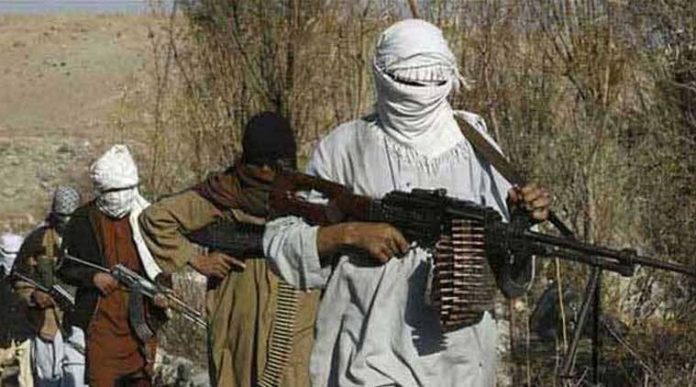
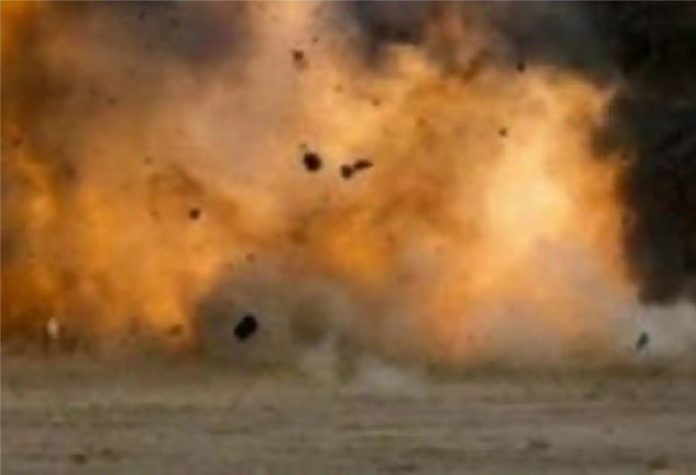
Top Jaish commander Salman Azhar shot dead by unknown gunmen in Pakistan

Maulana Salman Azhar, a commander of Pakistan-based Jaish-e-Mohammad (JeM) terrorist
Maulana Salman Azhar, commander of Pakistan-based Jaish-e-Mohammad (JeM) terrorist

Islamabad, Apr 30: Unknown gunmen have killed one more anti-India terrorist commander in Pakistan, close on the heels of eliminating top commander of Lashkar-e-Taiba (LeT) in that country.

Maulana Salman Azhar, a commander of Pakistan-based Jaish-e-Mohammad (JeM) terrorist outfit and a close aide of its chief Masood Azhar, has been shot dead by persons in Bahawalpur in Punjab province of Pakistan.

He was shot while travelling in a car.

JeM has the headquarters in Bahawalpur and Salman Azhar used to operate from there, planning and overseeing execution of terrorist attacks in India, according to sources.

He is the second top commander of Pakistan-based anti-India terrorist groups to be eliminated in that country in less than a week.

Three days back, Sheikh Yusuf Afridi, a senior commander of Lashkar-e-Taiba (LeT) terrorist outfit, was gunned down by unknown gunmen in Khyber Pakhtunkhwa Province of Pakistan.

Afridi, a close associate of LeT chief Hafiz Saeed, was shot at from close range by some gunmen who fled fro the scene immediately.

These attacks come after a series of such incidents in various parts of Pakistan over the last few years in which a number of anti-India terrorists have been eliminated.

Both JeM and LeT are terrorist organisations propped up and fully supported by the Pakistani establishment through its Army and intelligence agency ISI.

Afridi was linked to various attacks in India. He was a key figure in LeT’s regional structure and was involved in recruitment and coordination of the outfit’s activities in the region.

JeM and LeT are on the banned list of the United Nations for its numerous terrorist attacks in India, including the ghastly multiple attacks in Mumbai in November 2008 in which 166 people, including foreigners, were killed over a period of 60 hours. (NVI)

False Promises of Land, Govt Jobs: EOW Kashmir Files Chargesheet in Major Fraud Case

Srinagar, Apr 30 (NVI):The Economic Offences Wing Kashmir (EOW) of Crime Branch J&K has filed a chargesheet in a significant fraud case involving false promises of land allotment and government jobs.

The chargesheet in FIR No. 84/2022 under Section 420 RPC has been submitted before the Court of Judge Small Causes Srinagar against Bashir Ahmad Bhat, son of Abdul Gani Bhat, a resident of Astanpora Tailbal, Hazratbal Srinagar.

Details of the case reveal that in January 2019, the accused allegedly duped several complainants by fraudulently obtaining a substantial amount of money. He had promised to arrange Jammu Development Authority (JDA) land in Jammu and secure government jobs for their relatives. However, he failed to fulfill either of the commitments.

Following complaints, the EOW Kashmir initiated an investigation, which established that the accused had deliberately deceived the victims and dishonestly extracted money on the basis of false assurances. The probe confirmed the offence of cheating under Section 420 RPC.

Based on the evidence collected, the chargesheet has now been filed before the competent court for judicial proceedings.

Meanwhile, the Crime Branch has urged the general public to remain cautious of such economic fraudsters. Citizens have been advised to report any such incidents to SSP EOW Kashmir, Shri Abdul Waheed Shah, or submit complaints via email at [email protected].(NVI)

SSP Anantnag Reviews Security for Sanjay 2026 Yatra

Anantnag, April 30:(NVI)SSP Anantnag, Shri Amod Ashok Nagpure (IPS), today chaired a high-level meeting at the District Police Office (DPO) Anantnag to review and finalize arrangements for the upcoming Sanjay 2026 Yatra.

The meeting was attended by the SP Headquarters Anantnag, ASP North (Camp Aishmuqam), and other senior police officers and concerned officials. Detailed discussions were held on security measures, traffic regulation, crowd management, and coordination with line departments to ensure the smooth and safe conduct of the Yatra.

SSP Anantnag stressed the need for robust security arrangements and seamless coordination among all stakeholders. He directed officers to remain vigilant, ensure proper deployment of personnel, and strengthen communication systems to effectively handle any contingencies.

Special emphasis was laid on facilitating pilgrims, ensuring their safety, and providing necessary assistance throughout the Yatra period. Officers were instructed to carry out regular inspections, identify vulnerable points, and take proactive measures to mitigate potential risks.

The meeting concluded with a comprehensive review of preparedness and a reaffirmed commitment by all officers to ensure the peaceful and successful conduct of the Sanjay 2026 Yatra.(NVI)

Amit Shah Arrives in Leh on Two-Day Visit

Union Home Minister Amit Shah at Parliament House during the Budget Session in New Delhi.

Leh, Apr 30 (NV): Union Home Minister Amit Shah on Thursday arrived in Leh on a two-day visit, during which he will attend a series of official and ceremonial engagements, officials said.

The visit coincides with the occasion of Buddha Purnima and the first-ever international exposition of the holy relics of Gautama Buddha, scheduled to begin on May 1.

Officials said Shah is expected to attend the inaugural function of the exposition and review ongoing developmental initiatives in the Union Territory of Ladakh.

During his stay, senior administrative and security officials are also likely to brief him on key issues concerning the region, they added.(NVI)

Vande Bharat train service between Jammu City and Srinagar from May 2
Two pairs of trains will run 6 days a week, covering the journey in less than 5 hours

Jammu, Apr 30: The Vande Bharat train service between Srinagar and Katra has been extended to Jammu city and the regular service will start from May 2.

The formal inauguration was conducted today at the Jammu Tawi Railway Station by Railways Minister Ashwini Vaishaw along with Jammu and Kashmir Chief Minister Omar Abdullah.

Two pairs of services will operate across the corridor, covering a distance of around 266 km in less than 5 hours.

The first service (Train No. 26401) will depart Jammu Tawi at 6:20 AM, halt at Shri Mata Vaishno Devi Katra, Reasi, and Banihal and arrive at Srinagar at 11:10 AM, marking a journey of four hours and fifty minutes.

Its return (Train No. 26402) will leave Srinagar at 2:00 PM and reach Jammu Tawi by 6:50 PM.

This pair will run six days a week, except Tuesday.

The second service (Train No. 26404) will depart Srinagar at 8:00 AM, halt at Banihal and Katra, and arrive at Jammu Tawi by 12:40 PM.

Its return (Train No. 26403) will depart Jammu Tawi at 1:20 PM and reach Srinagar by 6:00 PM.

This pair runs six days a week, except Wednesday.

These will be 20-coach trains, instead of the 8-coach ones in operation currently.

Together, the two pairs ensure that passengers have a morning and an afternoon Vande Bharat option from both ends of the corridor on most days of the week, giving travellers meaningful flexibility in planning their journeys.

Until now, pilgrims and passengers arriving at Jammu Tawi Railway Station from Delhi, Mumbai, and beyond had to change trains or arrange separate road transport to reach Katra to visit Mata Vaishno Devi shrine situated in the Trikuta mountains.

With the extension, they will be able to board the Vande Bharat directly at Jammu Tawi and reach the Vaishno Devi base camp at Katra, and travel onwards all the way to Srinagar, without a single interchange.

The same seamless journey works in the other direction too. A traveller boarding at Srinagar will now be able to reach Jammu Tawi in a single, unbroken ride, connecting directly to the national rail network.

The Pilgrim: A Blessed Journey Made Easier

For the millions of devotees who travel each year to seek the blessings of Shri Mata Vaishno Devi, this extension removes a persistent inconvenience, the mandatory interchange at Katra.

Until now, a pilgrim had to alight at Katra and board a separate Vande Bharat to continue onward, or vice versa. That break in journey is now eliminated.

More significantly, for the growing number of pilgrims who combine the Vaishno Devi darshan at Katra with the Amarnath Yatra, whose base camps at Pahalgam and Baltal are accessed from Srinagar, the entire pilgrim circuit of J&K is now achievable on a single, unbroken rail journey, without a change of train, a second reservation, or the anxiety of a missed connection.

For the Indian and international tourist, this extension opens an entirely new way to experience Jammu & Kashmir.

A visitor flying into Jammu can now board the Vande Bharat at Jammu Tawi and ride through some of the most breathtaking terrain on the subcontinent, past the Shivalik foothills, across the engineering marvel of the Chenab and Anji bridges, through tunnels carved into the Himalayan rock and arrive in Srinagar, ready to experience the Dal Lake, the Mughal Gardens, and the legendary hospitality of the Valley.

No highway delays, no mountain road anxiety, no weather-dependent road closures.

The extension is expected to give a significant boost to tourism across the entire J&K corridor, making the region accessible to a far broader segment of travellers who may have been deterred by the logistics of the journey. (NVI)

Salim Dola Deportation: What It Reveals About India–Turkey Relations

Salim Dola Deportation: What It Reveals About India–Turkey Relations

New Delhi, April 30: The deportation of alleged drug trafficker Salim Ismailbhai Dola from Turkey to India has gone beyond a routine law enforcement action, offering a glimpse into the complex and often contradictory nature of India–Turkey relations.

While political ties between the two countries have frequently been strained, especially over Turkey’s alignment with Pakistan on sensitive issues like Jammu and Kashmir, the Dola case highlights that security cooperation continues to function quietly beneath diplomatic tensions.

Who Is Salim Dola?

Salim Dola is a Mumbai-based alleged drug trafficker linked to international narcotics networks. Investigators describe him as an associate of underworld figure Dawood Ibrahim and a close aide of Iqbal Mirchi.

He was implicated in a major 2018 drug seizure in Mumbai worth around ₹1,000 crore. After multiple legal proceedings and eventual acquittals, he reportedly fled India in 2020, moving first to Dubai and later to Istanbul, where he continued alleged narcotics operations.

Indian agencies had issued a Red Corner Notice through Interpol, leading to coordinated action between Turkish and Indian authorities.

Arrest and Deportation

Dola was detained in Istanbul in a joint operation involving Turkey’s intelligence and police agencies. He was deported to India on April 28, 2026, shortly after his arrest.

Authorities also noted that his attempt to obtain Turkish citizenship under an investment scheme was blocked after Indian agencies shared intelligence inputs.

The case reflects active coordination between Indian and Turkish security agencies on transnational crime, despite broader diplomatic disagreements.

India–Turkey Relations: Cooperation Amid Tensions

India and Turkey share a relationship marked by both engagement and friction.

On one hand, both countries have institutional cooperation mechanisms, including counter-terrorism dialogue frameworks and joint working groups established in the early 2000s. Over the years, Turkey has previously assisted India in deporting individuals linked to extremist and criminal networks.

On the other hand, political relations have been strained due to Ankara’s consistent alignment with Pakistan on issues such as Kashmir, particularly after India’s constitutional changes in 2019.

Tensions escalated further following recent geopolitical developments, including Turkey’s public statements in support of Pakistan during India–Pakistan confrontations, which triggered criticism in India and calls for boycotts in trade and tourism sectors.

A Pattern of “Selective Cooperation”

Despite political differences, the Dola deportation is not an isolated incident. Similar cooperation has occurred in the past, including:

  • Deportation of individuals linked to extremist networks
  • Joint monitoring of transnational terror financing
  • Intelligence sharing through formal and informal channels

This suggests a pattern of selective but functional cooperation, especially in areas involving security and organised crime.

What the Case Signals

Experts view the episode as evidence that:

  • Diplomatic tensions do not fully disrupt law enforcement cooperation
  • Both countries retain shared interest in tackling transnational crime
  • Security engagement often continues even when political ties are strained

At the same time, the broader relationship remains sensitive due to competing geopolitical alignments and regional positions.

The Bigger Picture

India–Turkey relations continue to oscillate between engagement and friction. While trade, tourism, and economic ties have expanded over the years, political disagreements—especially on Kashmir—remain unresolved.

The Salim Dola deportation highlights this dual reality: strained diplomacy at the political level, but pragmatic cooperation at the security level.

After criticsm, Nepal Airlines Apologises for showing Jammu and Kashmir as Part of Pakistan

Nepal Airlines
Nepal Airlines

New Delhi, April 30: Facing widespread criticism, Nepal Airlines has apologised for wrongly showing Jammu and Kashmir as part of Pakistan in a social media post.

The Airlines issued a formal apology today, saying the map contained “significant cartographic inaccuracies regarding international boundaries” and did not reflect the official position of either the airline or the Government of Nepal.

The airline also confirmed that the post was promptly removed.

The airline had shared a network map in which the entire region of Jammu and Kashmir was incorrectly shown as part of Pakistan.

The post quickly drew backlash from users, particularly in India, who flagged the territorial inaccuracy and called it misleading.

Official Apology and Response

The carrier said:

“We sincerely apologise for the error in the network map recently shared on our social media channels. The map contained significant cartographic inaccuracies regarding international boundaries that do not reflect the official stance of Nepal or Nepal Airlines.”

Image

It further added that it deeply values regional relationships and regretted any unintended offence caused by the post. An internal review has also been initiated to ensure stricter checks on published material going forward.

Online Backlash

The post triggered strong reactions on social media, with users in India criticising the depiction of territorial boundaries. Some accused the airline of carelessness, while others viewed it as a sensitive geopolitical error.

Public figures also reacted to the controversy, including Bhojpuri actor Khesari Lal Yadav, who alleged that the depiction was deliberate.

Context

The dispute highlights how sensitive cartographic representations remain in South Asia, particularly regarding Jammu and Kashmir, a region whose status is politically and diplomatically contested.

Nepal Airlines has reiterated that the error was unintentional and does not represent any official stance, seeking to ease tensions following the incident.

What Triggered J&K’s Urdu Debate Over Job Recruitment Rules?

What Triggered J&K’s Urdu Debate Over Job Recruitment Rules?

Srinagar, April 30: A proposed amendment to Jammu and Kashmir’s Revenue Service recruitment rules has ignited a wider political and cultural debate, turning what began as a procedural update into a flashpoint over language, identity, and administrative access.

The draft proposal, currently open for public feedback, has drawn strong criticism from the Peoples Democratic Party (PDP), which alleges that the move could dilute the role of Urdu in government services. However, the National Conference-led administration has rejected these claims as premature, maintaining that no final decision has been made.

Protests and Political Reactions
The issue spilled onto the streets of Srinagar, where PDP leader Iltija Mufti led protests, framing the proposal as a threat to the region’s linguistic heritage. She argued that Urdu has historically served as a unifying language across communities and remains deeply embedded in governance and daily life.

In response, government representatives clarified that the notification was only meant to invite public opinion. Advisor Nasir Aslam Wani stated that Urdu continues to hold importance in revenue administration and will not be removed from recruitment processes.

Why Urdu Matters in Administration
Urdu has long been central to governance in Jammu and Kashmir, particularly in land and revenue records. For decades, it was mandatory for key administrative roles such as Patwari and Naib Tehsildar because official documents were maintained in the language. Officials argue that removing this requirement without adequate transition measures could create practical challenges in handling existing records.

Historical Context
Urdu became the official court language in 1889 under Maharaja Pratap Singh, replacing Persian. It remained the sole official language of the region for over a century, serving as a link language among diverse linguistic groups including Kashmiri, Dogri, and Punjabi speakers.

Following the abrogation of Article 370 and the reorganisation of Jammu and Kashmir into a Union Territory, the government expanded the list of official languages to include Kashmiri, Dogri, Hindi, and English alongside Urdu. This ended Urdu’s exclusive status.

The Core Debate
At the heart of the controversy lies a larger question: should recruitment policies prioritise administrative practicality or reflect evolving linguistic diversity?

Supporters of the proposed changes, including voices aligned with the Bharatiya Janata Party, argue that removing mandatory Urdu requirements promotes inclusivity and opens opportunities for candidates from different linguistic backgrounds.

Opponents, however, warn that reducing Urdu’s role risks weakening a language deeply tied to the region’s history and governance. They also highlight the continued reliance on Urdu in official records, suggesting that abrupt changes could disrupt administrative efficiency.

What Lies Ahead
With the proposal still under review, the government has emphasised that public consultation is part of a democratic process. The final decision is expected to balance concerns around inclusivity, administrative needs, and cultural preservation.

For now, the debate continues to reflect a broader tension between modern policy reforms and the preservation of linguistic identity in Jammu and Kashmir.

Cyber Police Files FIR Against PDP Leader Iltija Mufti Over Separatist-Linked Social Media Content

Srinagar, Apr 30 (NVI): Cyber Police Kashmir has registered an FIR against PDP leader Iltija Mufti and others in connection with alleged separatist-related content circulated on social media, officials said on Thursday.

Sources said that the case was initiated after a video posted on X (formerly Twitter) by Iltija Mufti featuring slain separatist leader Syed Ali Shah Geelani came to the attention of authorities.

They said FIR No. 11 has been registered under Section 152 of the Bharatiya Nyaya Sanhita (BNS), which pertains to acts threatening the sovereignty, unity, and integrity of India.

Officials further stated that unidentified persons have also been included in the FIR for allegedly sharing and amplifying the content online. Cyber Police Kashmir has taken up further investigation to determine the intent and extent of circulation of the video. (NVI)

Rain, Thunderstorms Likely Across J&K From May 3–5: MeT

(File/Representational image)

Srinagar, Apr 30 (NVI): Moderate to heavy rainfall accompanied by thunderstorms is likely to affect several parts of Jammu and Kashmir from May 3 to 5, officials said on Thursday.

The Meteorological Department has forecast widespread rainfall activity across the Union Territory, with peak intensity expected on May 3 and 4.

Some areas may also witness gusty winds and hailstorms during the period, the officials said.

A noticeable drop in temperature is also expected due to the weather activity, they added.

Further updates and advisories are likely to be issued in the coming days.(NVI)

MUST READ