Wednesday, October 14, 2026
Home Blog Page 20

JKAACL, University of Kashmir sign MoU for two-year diploma in calligraphy

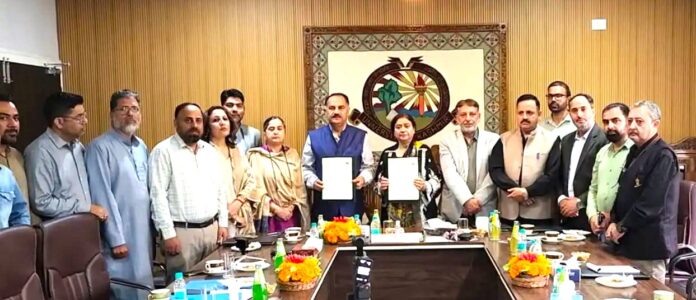
Srinagar, Sep 26 (NVI) The Jammu and Kashmir Academy of Art, Culture and Languages (JKAACL) and the University of Kashmir have signed an MoU to jointly offer a two-year diploma programme in traditional and professional calligraphy, officials said.

The programme aims to preserve and promote the region’s traditional calligraphic practices while providing students with structured academic and practical training.

The MoU was signed by JKAACL Secretary Harvinder Kour and University of Kashmir Registrar Prof Naseer Iqbal in the presence of senior officials and academic functionaries of both institutions.

Under the collaboration, the diploma will be offered through the Pran Krishan Kaul Institute of Music and Fine Arts (IMFA) of the University of Kashmir in collaboration with JKAACL.

The programme will have an intake of 10 students in each academic session. Candidates who have passed Class 12 or an equivalent examination will be eligible to apply, the officials said.

Three months of academic instruction each year will be conducted at IMFA, while the remaining period, focused on practical and traditional calligraphy training, will be held at the premises of JKAACL.

Kour said the collaboration was an important step towards safeguarding the region’s traditional knowledge and artistic practices through formal education and structured training.

University of Kashmir Vice-Chancellor Prof Nilofer Khan said the programme would bring traditional calligraphic practices within a structured academic and skill-development framework and provide learners opportunities for professional advancement.

Principal Secretary Culture B M Sharma appreciated the initiative and said institutional collaborations of this nature have long-term significance in strengthening cultural and academic activities.

He said the department would explore further avenues of collaboration with the University of Kashmir in other areas.

The signing ceremony was attended by JKAACL Additional Secretary Ideel Saleem, IMFA Principal Dr Habibullah Shah, Special Secretary to the Vice-Chancellor Dr Ashfaq Zarri, Dean Academic Affairs Prof Shariefuddin Pirzada and other senior officials.

The initiative is expected to contribute to the preservation, promotion and transmission of traditional calligraphic practices while equipping young learners with specialised skills for opportunities in the cultural and creative fields.—(NVI)

J&K DGP Nalin Prabhat Reviews Anti-Terror Operations in Udhampur-Kathua Belt

Shivam Bakshi

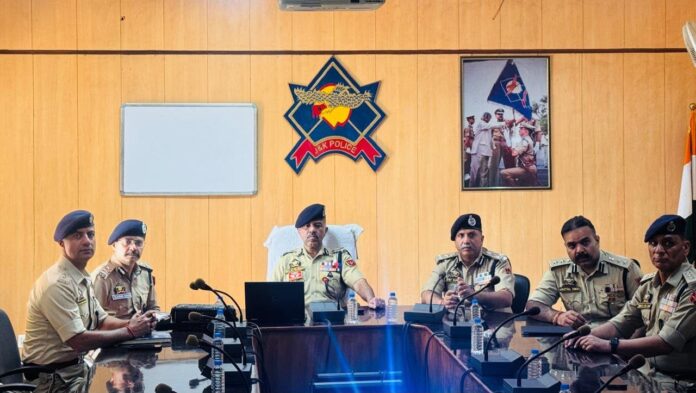
Udhampur, Sep 26 (NVI): Jammu and Kashmir Police chief Nalin Prabhat on Saturday reviewed ongoing counter-terrorism operations in the Udhampur-Kathua belt and felicitated security personnel for their role in the neutralisation of two Pakistani Jaish-e-Mohammed terrorists during Operation Soan, officials said.

Prabhat, accompanied by Inspector General of Police, Jammu Zone, Tejinder Singh, visited Udhampur and took stock of the operational situation and progress of ongoing operations in the area, they said.

The officers also reviewed security arrangements and operational preparedness in view of the prevailing security situation, officials said.

The DGP felicitated personnel involved in the operations and appreciated their courage, commitment and professional conduct.

The personnel were specifically commended for their role in the successful operation in which two Pakistani Jaish-e-Mohammed terrorists were neutralised during Operation Soan, they said.

Prabhat stressed the need for continued vigilance, operational preparedness and close coordination among security agencies engaged in counter-terrorism operations.

Singh also reviewed operational aspects and security measures along the Udhampur-Kathua belt during the visit.

Security forces have been conducting operations in the Jammu region to track terrorist networks and prevent attempts to disrupt peace and security, officials said.—(NVI)

Tens of thousands forcibly disappeared in Balochistan: Italian Human Rights Body chief

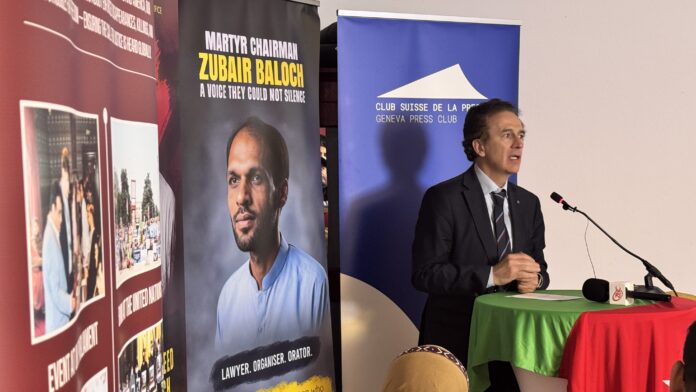
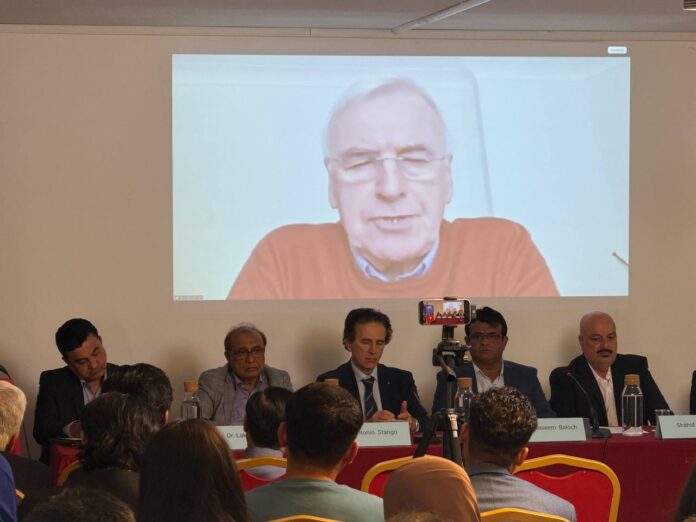
Human-rights expert Antonio Stango, addressing the Baloch National Movement’s (BNM) 12th Balochistan International Conference

Geneva, Sept 26: Antonio Stango, president of the Italian Federation for Human Rights (FIDU), has recognised that tens of thousands of people in Balochistan have been forcibly disappeared and thousands have been killed by the Pakistani forces and urged the international bodies to act.

In recent years, there have been hundreds of enforced disappearances in Balochistan, he said, addressing the Baloch National Movement’s (BNM) 12th Balochistan International Conference in Geneva.

Stango, who is professor of international organisations and human rights at Rome Link Campus University, noted that millions of people in Balochistan live in misery, even though their historical land is rich in natural resources.

He said the gap between the theory of international human rights and the reality of their violation is widening, and that peoples whose collective rights are taken from them still too often do not get access to United Nations rooms.

He added that he had spent most of his life working on this subject as a civil-society expert and had not remained confined only to academic circles.

He said that on the one hand we should study the theory of international human rights thoroughly, and on the other we should look at what the reality is. More and more often the reality of respect for human rights or rather, the reality of human-rights violations is very far from the theory.

He said this is true for individuals and for peoples as well. Most of you have been victims of specific violations of the rights of the Baloch nation.

He pointed to those provisions that on paper protect the rights of groups who share a language, history, religion or other ethnic features, including Article 27 of the International Covenant on Civil and Political Rights. He said states have begun to forget these articles.

He said that in Europe history has mostly been understood as the history of Western empires. Some speakers mentioned Pakistani imperialism. This is something we in Europe do not know. People read only a few headlines. They open television and social media and see titles and slogans, which do not go deep into the major problems of our planet.

He said when it is a matter of millions of people whose collective rights have been systematically violated for decades, I believe this should be a concern not only for those directly affected, but for all of us.

He said human rights are universal and belong to every person from birth. Authoritarian governments of different political types reply that rights are universal, but that they should be applied in a “regional or relative” way. In his view, relativism is a major danger to respect for human rights.

He said engagement with the UN system is both necessary and difficult.

“It is no coincidence that the meeting is being held at the Geneva Press Club, not in the nearby United Nations conference hall. I suspect some governments would oppose holding such a meeting there,” the activist said.

Recalling the organisation of UN side events for non-governmental organisations, he said that when representatives of peoples whose collective rights have been violated are invited, official representatives ask why they are in the room. They are terrorists. They should be imprisoned; they should not be allowed to speak at a UN forum.

He said there is a diplomatic confrontation with the UN system, even though that system in theory at least allows every voice to be heard and should give every people the chance to speak about their conditions.

He said he fully agreed with the point put to the conference: there is no lasting peace without justice; there is no reconciliation without trust.

He said we all share this need and this strong hope that there will be peace in your country as well, as in other parts of the world. But we know there can be no peace without justice.

He said that about thirty years ago he was part of the movement that helped create the International Criminal Court in The Hague. One organisation in that movement was called No Peace Without Justice. It still exists, and work still remains.

He said more states are leaving that court because governments fear being judged. In his view the court does not decide on a political basis. It hears only the gravest international crimes: genocide, crimes against humanity, war crimes and, in some cases, aggression. States should not be afraid of standing before international justice.

He also mentioned the theoretical possibility that a person can be tried for crimes against humanity even in a state of which he or she is not a citizen. He said: “International justice must work. A great deal remains to be done to reach effective international justice.”

Restating his commitment, he said FIDU and the Italian Helsinki Committee want close cooperation between civil society, international organisations and national liberation movements, however difficult that may be.

J&K LoP Sunil Sharma Meets Amit Shah in New Delhi

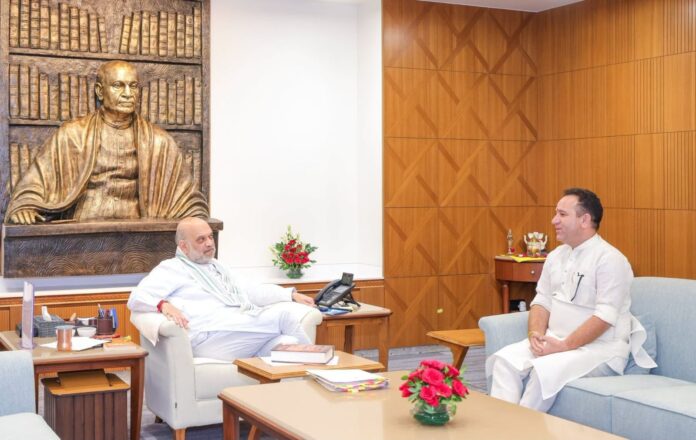
New Delhi, Sep 26 (NVI) : Leader of Opposition in the Jammu and Kashmir Legislative Assembly Sunil Kumar Sharma on Saturday met Union Home Minister Amit Shah here and discussed various issues concerning the Union Territory.

The meeting covered the security situation, law and order, development-related matters and issues linked to the ongoing Assembly session, according to sources.

Sharma apprised Shah of various concerns concerning the people of Jammu and Kashmir and discussed matters related to development and public welfare.

Sharma said the Home Minister reiterated the Union government’s commitment to peace, development and prosperity in Jammu and Kashmir.

The Leader of Opposition also said Shah assured him of all possible support and cooperation in addressing issues concerning the Union Territory.

The meeting took place amid the ongoing session of the Jammu and Kashmir Legislative Assembly, where several issues related to governance, development and public welfare are being discussed.—(NVI)

Trump rejects ceasefire proposal of Iran; shares image of Hormuz with new label

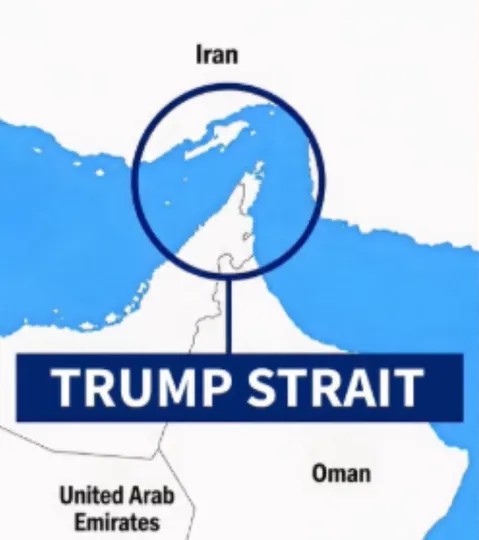
Donald Trump shared this image about Strait of Hormuz on social media

New Delhi, Sept 26: Amid reports of his rejecting a proposal for a 7-day ceasefire with Iran, US President Donald Trump has shared an image of a map depicting the Strait of Hormuz and labelling it as “Trump Strait”.

This comes hours after the White House reportedly said the US officials had positive and constructive conversations with mediators on the Middle East conflict.

Earlier yesterday, Iranian Foreign Minister Abbas Araghchi said at the UN that Iran had conveyed a “concrete seven-day plan” to the US.

“Iran has conveyed to the United States, through Qatar, a concrete seven-day plan. If the necessary conditions are met, the strait can be reopened, and normal maritime passage restored within seven days,” he said.

Trump rejected Iran’s proposal for a seven-day ceasefire, according to Wall Street Journal which cited some unknown US officials.

Furthermore, the US President told aides that he expects to resume strikes against Iran after the November midterms.

The proposal would have reopened the Strait of Hormuz and resumed nuclear talks in return for the US lifting its blockade of Iranian ports, the report further said.

The Strait of Hormuz is a key waterway for the world’s oil supply.

Iran President Masoud Pezeshkian, who was in New York to attend the 81st session of the United Nations General Assembly (UNGA), delivered his address on September 23.

On the sidelines, Pezeshkian held bilateral meetings with several senior officials, including UN Secretary-General António Guterres.

On February 28, joint US-Israeli airstrikes targeted Iran, resulting in the death of its Supreme Leader, Ayatollah Ali Khamenei.

In response, Tehran launched retaliatory strikes against US and Israeli assets across the region.

Furthermore, Iran tightened its grip on the Strait of Hormuz, sparking severe international concern over regional security and a rise in global energy prices. (NVI)

Jaishankar describes Pakistan as ‘terrorist country’

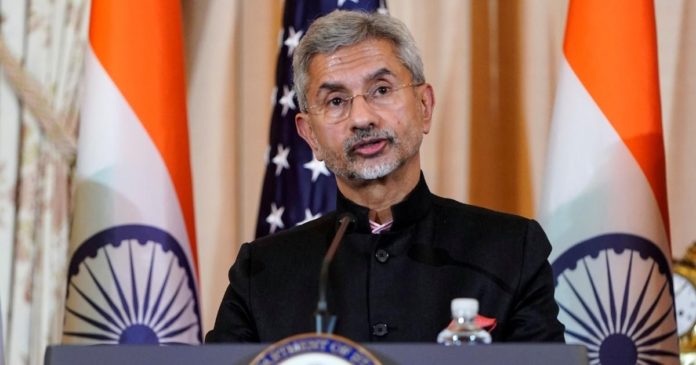
EAM S Jaishankar
External Affairs Minister S Jaishankar

New Delhi, Sept 26: “A terrorist country is asking me that question?”

This was the cryptic response of External Affairs Minister S Jaishankar whenn a Pakistani journalist, at a press meet at the United Nations, asked him: “When will your government stop sponsoring terrorism in Pakistan?”

Jaishankar was obviously referring to Pakistan which continuously supports and promotes international terrorism, which has affected India particularly.

The press meet, along with Sara Beysolow Nyanti, Minister for Foreign Affairs of the Republic of Liberia, was organised in connection with the Group of Friends on Safety and Security of Shipping and Seafarers on the sidelines of the annual United Nations General Assembly (UNGA) session.

The event had been announced as a remarks-only briefing before it began.

However, towards the end, the Pakistani reporter abruptly intervened and asked the question.

Jaishankar, who is New York to address the UNGA session, has held a number of bilateral and multilateral meetings.

India has repeatedly called on Pakistan to take “credible action” against cross-border terrorism. India launched Operation Sindoor following the Pahalgam terror attack, in which 26 civilians were killed.

India’s actions to defend itself against terrorism following the Pahalgam terror attack on 22 April 2025 have been recognised by many nations. (NVI)

India highlights Pakistan’s support to terrorism, hosting of Osama Bin Laden

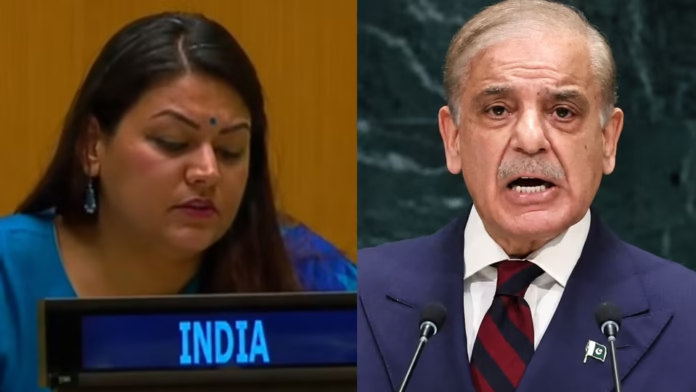
First Secretary in India's Permanent Mission to the UN Petal Gahlot countering Pakistan PM Shehbaz Sharif at UN

New Delhi, Sept 26: India has highlighted Pakistani regime’s support to terrorism and harbouring of the world’s most wanted terrorist Osama Bin Laden and justified last year’s ‘Operation Sindoor’ as a right to self-defence.

Exercising India’s Right of Reply at the United Nations General Assembly (UNGA), First Secretary in the country’s Permanent Mission to the UN, Petal Gahlot, rubbished Pakistan Prime Minister Shehbaz Sharif’s remarks on India and Jammu and Kashmir made from the same global platform.

She pointed out Pakistan’s record on terrorism, democratic rights and treatment of minorities.

“At the heart of the issue is the long-standing practice of cross-border terrorism by Pakistan. We demonstrated last year that terrorists will have nowhere to run and nowhere to hide. Our right to defend ourselves against terrorism will be exercised and continued. Terrorism by Pakistan will have consequences,” Gahlot said.

“We are confident that this Assembly will recognise Pakistan and its policies for what they really are, not what its representative mendaciously projects it to be. Reiterating falsehoods year after year does not make them true. Pakistan’s terrorism, deceit and duplicity will neither benefit it nor the world,” Petal Gahlot told the Assembly.

Gahlot also took aim at Sharif’s remarks on democratic rights and human values, accusing Pakistan’s military establishment of wielding real power.

“We heard some hypocritical homilies about democratic rights and human values from a regime whose capital at this very moment is being fortified against its own people. And that, Mr President, is happening because this is a regime of the army, by the army, and for the army.Their puppets may come and go, but let us have no illusion about who calls the shots. The reality of Pakistan is expressed in its 27th Amendment and the lifelong immunity granted to its real ruler,” she said.

The Indian diplomat also pointed to Osama bin Laden’s presence near the Pakistani Army’s premier academy, while questioning Islamabad’s criticism of India.

“This afternoon, the General Assembly heard some bizarre remarks from the representative of Pakistan. This happens just a fortnight after New York City and the world marked the 25th anniversary of the horrendous 9-11 terrorist attack. This context is important to keep in mind because its mastermind, Osama bin Laden, was living right on the doorstep of the Pakistani Army’s premier academy. This was the very entity which was the subject of such deep genuflection before us today by the representative of Pakistan. But all this is only to be expected from what Pakistanis themselves call a Form 47 government”

Gahlot further accused Pakistan of hypocrisy over religious intolerance and minority rights.

“The views we heard emanate from those with a long record of bigotry and hatred. They claim to uphold security during the day; they actually carry out terrorism at night. This assembly was subjected to remarks about religious intolerance from the very regime whose mainstay is blasphemy laws. The world knows how minorities are treated in Pakistan. No pious platitude can mislead it,” she added.

Sharif had also raised the issue of Jammu and Kashmir in his UNGA address. Rejecting Pakistan’s remarks, India reiterated that Jammu and Kashmir is an integral part of the country and instead drew attention to Pakistan-occupied Jammu and Kashmir.

India’s response came after Sharif’s address, in which he also raised the Indus Waters Treaty and India’s Operation Sindoor. New Delhi has consistently rejected Pakistan’s claims over Jammu and Kashmir and maintained its right to respond to cross-border terrorism.

J&K LG Sinha Lauds Army’s Mega Eye Camp In Tangdhar

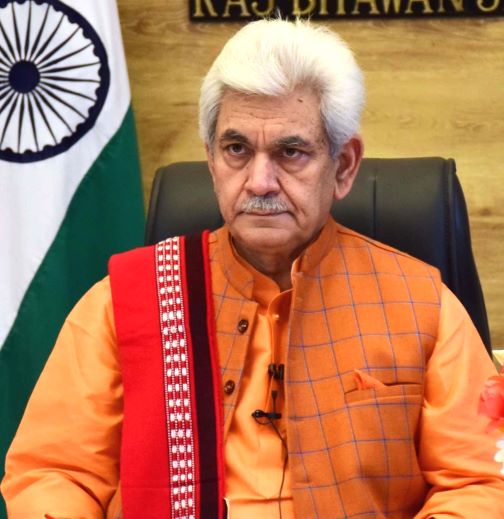
File Photo: LG J&K Manoj Sinha

Srinagar, Sep 26 (NVI) Jammu and Kashmir Lieutenant Governor Manoj Sinha on Friday lauded the Armed Forces Medical Services for conducting a mega eye surgical camp in Tangdhar area of Karnah under Operation Drishti.

Sinha said restoring eyesight to 220 people in an underground operation theatre in the challenging border area was a remarkable achievement.

In a post on X, the LG said the medical team, led by Brigadier Sanjay Kumar Mishra, conducted advanced eye surgeries, including phacoemulsification, retinal and glaucoma procedures, in the remote border area.

He said the initiative reflected the spirit of Operation Sadbhavana and helped bring specialised healthcare services to remote border hamlets.

Sinha congratulated the surgeons and personnel of the Armed Forces Medical Services for successfully conducting the surgical camp.

“Restoring sight to 220 people in underground operation theatre in a challenging border area is a remarkable achievement,” he said.—(NVI)

UK Govt needs to play more active role on human rights in Balochistan: British MP

Labour MP and former Shadow Chancellor John McDonnell addressing BNM conference

Geneva, Sept 25: British Member of Parliament and former Shadow Chancellor John McDonnell has urged his country’s government to play a more active role on human rights issue related Balochistan.

The Labour Party MP said Britain’s own colonial history places a “special responsibility” on it.

Addressing online the 12th Balochistan International Conference, organised by the Baloch National Movement (BNM) at the Geneva Press Club, McDonnell said British ministers should help address human rights violations and should recognise the Baloch people’s demands for “peace, justice and the right to self-determination.”

He told participants that he has continued to provide political and diplomatic support in Britain to Baloch people affected by Pakistani repression, and that he will maintain that position.

He said the British government should also recognise its responsibilities on asylum.

New restrictions, he said, have increased the difficulties facing those seeking asylum.

He said he would continue to argue that some people seek asylum and protection because their lives are at risk, while also acknowledging the limits of what he can achieve. Influencing policy, he said, is challenging because of the British government’s relations with Pakistan.

He said Britain’s past rule in the region has left it with responsibilities in the present. Because of its history of colonial rule in the region, Britain should acknowledge its role, and that is why it has a special responsibility to ensure that the Baloch have the same basic rights that exist in Britain: the right to self-determination, human rights, and the fundamental protection of peace and justice in their own land.

He said there has been a change in Britain’s political leadership, and that in that context activists would seek meetings with ministers to discuss a strategy covering both urgent issues and a longer-term position on civil liberties and the right to self-determination.

Pakistan is ‘Punjabi colonialism’ looting resources of Balochistan: Pashtun leader

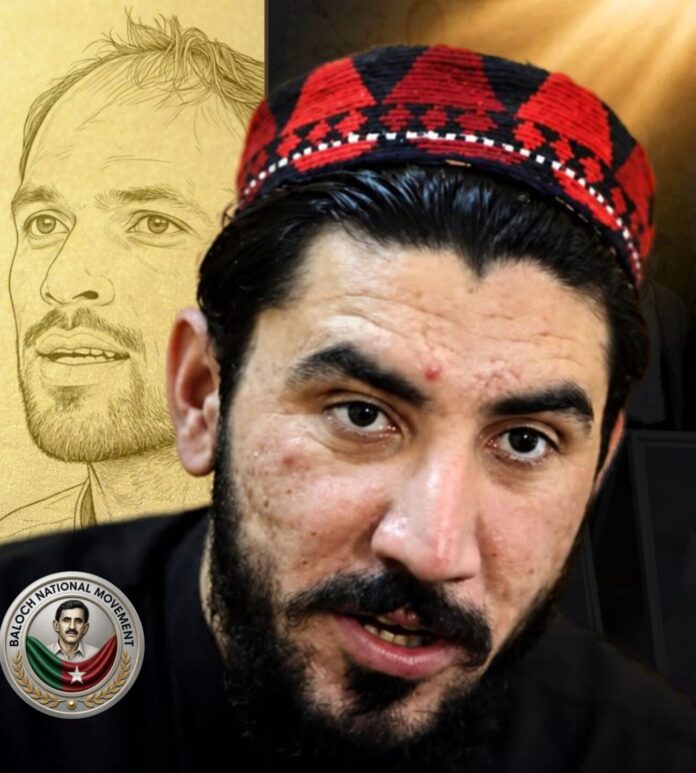
Geneva, Sept 25: Pashtun Tahafuz Movement leader Manzoor Pashteen has described Pakistan as “Punjabi colonialism” and said its industries were being run by seizing Balochistan’s gas, minerals and gold.

Those who speak against this plunder of resources are labelled terrorists and then jailed or disappeared, he said while mentioning the fate of Mahrang Baloch, Beebo Baloch, Gulzadi Baloch, Bebagr Baloch, Sibghatullah Baloch and several other people who are in prison for the peaceful advocacy of Baloch human rights.

He was addressing online the 12th Balochistan International Conference at the Geneva Press Club, organised by the Baloch National Movement. The conference was dedicated to the memory of BNM’s martyred chairman, Zubair Baloch.

According to Manzoor Pashteen these activists have “no other crime” except that they raised their voice peacefully. He said the state of Pakistan had imprisoned them and given them life sentences.

He said Baloch young people were being disappeared on a daily basis and that in Balochistan, children and women inside their homes were also being killed in aerial aggression.

He said the state is not prepared to accept Balochistan as the land of the Baloch and is trying to give its domination a constitutional form.

He said Pashtuns too are facing the same kind of conditions. We have data on more than two hundred thousand affected people; thousands have been killed and thousands are missing. Over the past two years women and children have also been targeted in drone and helicopter attacks.

He further said that in 2025 and 2026, in Khyber Pakhtunkhwa, 72 children aged one year or under were killed in Pakistan Army drone attacks.

Manzoor Pashteen said that despite human-rights violations Pakistan is overlooked because it flatters US President Donald Trump. In his words: “The flattery of one man is being given more importance than the killing of hundreds of thousands of people.”

Referring to the European Union’s GSP+, he said helicopters and warplanes used in aggression against villages were being run with resources obtained from that economic concession. He said that even after evidence was presented, Europe kept this status in place and Germany supported it.

He demanded of Europe that if a major step is not possible, then at least more funds and weapons should not be given to such a state, on which there are accusations of abuses.

He told the Baloch, PTM’s Pashtun workers, Sindhis and Kashmiris that pamphlets should be distributed among the public in Europe and the question asked why tax should be given to a country on which there are grave accusations.

Explaining protest in front of United Nations offices, he said there are restrictions on protest in Balochistan and Khyber Pakhtunkhwa, which is why people come to Geneva.

At the end he praised BNM’s programme and spoke of continuing the alliance of PTM, BNM and other organisations. He said that in Afghanistan too, children and women are mostly being killed in aerial bombardment.

MUST READ