Wednesday, March 25, 2026
Home Blog Page 1349

ISRO postpones launch of GISAT-1 satellite due to technical reasons

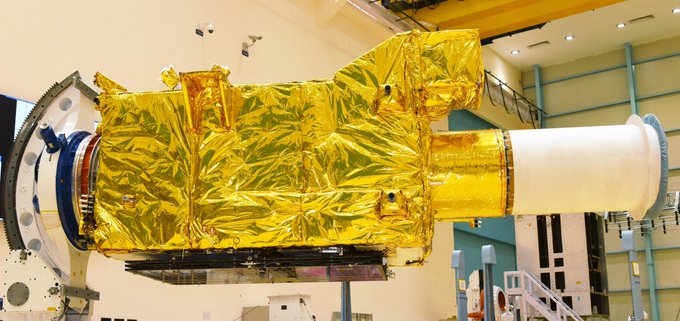
New Delhi (NVI): The Indian Space Research Organisation (ISRO) has postponed the launch Geo Imaging Satellite-1 (GISAT-1) due to technical reasons. The Indian space body said that they will come up with a revised launch date now.

“The launch of GISAT-1 onboard GSLV-F10, planned for March 05, 2020, is postponed due to technical reasons. Revised launch date will be informed in due course,” ISRO said in a tweet today.

The satellite, which will help the sectors like agriculture, forestry and mineralogy, was scheduled to be launched tomorrow.

GISAT-1 will be India’s first agile Earth observation satellite operating from geo-stationary orbit, according to the ISRO.

The satellite was scheduled to be launched by Geosynchronous Satellite Launch Vehicle (GSLV-F10) at 5.43 pm from Sriharikota launch centre, tomorrow.

The satellite is expected to help in providing real-time imaging of the planet Earth.

“Geo Imaging Satellite #GISAT1 will help in real time imaging of the Earth from its 36,000 km orbital home. This will find several applications in agriculture, forestry, mineralogy, disaster warning, etc. Launch on-board #GSLVF10 from Sriharikota on 5th March at 5:43 pm IST,” the ISRO tweeted.

GSLV-F10 is as tall as a 16-storey building and weighs a whopping 4,20,300 kilograms, the ISRO said.

28 people tested positive for coronavirus in India: Harsh Vardhan

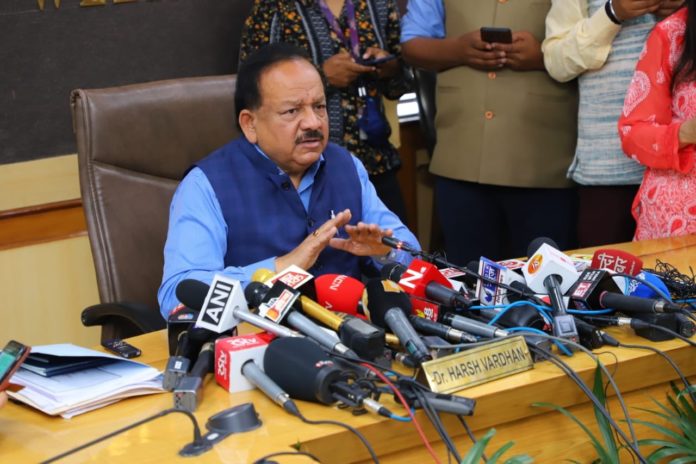
Union Minister Harsh Vardhan. (Source:@drharshvardhan)

New Delhi (NVI): Around 28 people have been tested positive for coronavirus in the country so far, including 16 Italian tourists, Union Minister of Health and Family Welfare, Harsh Vardhan, said today.

“Contact tracing of the person tested positive in Delhi was conducted, where it was found that he has infected 6 members of his family who are in Agra. All 6 members tested positive for coronavirus,” Harsh Vardhan said while addressing a press conference on the outbreak here.

16 out of 21 Italian nationals have also been found positive for coronavirus, along with one Indian national who was with the tourist group. They have been sent at Indo-Tibetan Border Police’s (ITBP) quarantine facility in Chhawla, he said.

The Health Minister added, “If Iran government supports the efforts made by India, then we have an intention to establish a test lab there as well. This will let us bring back our citizens from Iran after a thorough screening.”

“From now on, all flights and passengers will be part of universal screening, not just the 12 countries which were listed earlier,” Harsh Varshan added.

Meanwhile, the global death toll has reached 3,190 while more than 93,000 people have been infected in more than 80 countries. In China there have been 38 new deaths bringing the total to 2,981 and 80,270 positive cases in all.

North India up for another spell of rains from tonight

Light rains in Delhi
Representational Image

New Delhi (NVI): Rain and thundershower activities are expected to commence over Western Himalayas particularly over Jammu and Kashmir, Ladakh, Himachal Pradesh tonight.

This is due to one of the strongest active Western Disturbance that is going to approach Western Himalayas by today evening, reports SkymetWeather.

There will be a gradual increase in rains by the evening of March 5, in parts of north India. Many parts of Punjab, Haryana and Delhi NCR will start receiving rains at that time. Few rainfall activities are also likely over Northwest Uttar Pradesh, according to SkymetWeather.

Due to the Western Disturbance phenomenon, icy cold winds from the snow-clad mountains of Himalayas are reaching up to Northwest India, thus resulting in a significant drop in the minimum temperatures.

Karnal in Haryana is the coldest city in the plains of India, with its morning temperature settling at 9.2 degrees Celsius.

Punjab’s Ludhiana and Amritsar recorded minimum temperature at 11 and 11.4 degrees Celsius respectively.

Ambala in Haryana and Patiala in Punjab recorded minimum temperature at 11.6 and 12.1 degrees Celsius respectively.

Apart from this Hisar in Haryana, Bareilly in Uttar Pradesh, Raisen in Madhya Pradesh, Narnaul in Haryana and Meerut in Uttar Pradesh recorded minimum temperature at 12.3, 12.5, 12.6, 12.9 and 13.1 degrees Celsius respectively.

Meanwhile, Delhi and NCR region also saw a slight increase in minimum temperature to 14.4 degrees Celsius from 14.3 degrees Celsius recorded yesterday.

The maximum temperature today is expected to be around 28 degrees Celsius, according to the India Meteorological Department (IMD).

The overall air quality in the national capital today is in the “moderate” category.

According to the System of Air Quality and Weather Forecasting And Research (SAFAR), the Air Quality Index (AQI) in the national capital stood at 155 which falls in the “moderate” category.

The IMD has said that no significant change in the temperature is expected in the rest of the country.

J&K arms licensing case: IAS officer Rajiv Ranjan suspended

Mubashir Bukhari

Srinagar (NVI): A day after being sent in 10-day police custody, IAS officer and former Kupwara District Magistrate (DM) Rajiv Ranjan was suspended today for his involvement in arms licensing case.

“In pursuance of Rule 3(2) of All India Services (Discipline and Appeal) Rules, 1969, Kumar Rajeev Ranjan, IAS, Additional Chief Executive Officer, Metropolitan Regulatory Authority, Jammu, holding additional charge of Vice-chairman, Jammu Development Authority, shall be deemed to have been placed under suspension w.e.f 29.02.2020 i.e. the date on which he has been detained in the custody of CBI, SCB, Chandigarh,” an official order read.

Yesterday, Kumar Rajiv Ranjan and Itrit Hussain Rafiqui, both former DMs of Kupwara, were arrested on Sunday for issuing gun licenses “fraudulently and illegally in lieu of monetary consideration” during their respective tenures.

While Ranjan was in office from 2013-2015, Itrit held the post from 2015 to 2016.

“The Special Judge CBI Cases, Srinagar has today remanded the then two District Magistrates, Kupwara in ten days Police Custody in a case related to irregularities in issuance of arms licenses. Both the accused were arrested by CBI in an on-going investigation of the said case,” a CBI spokesperson said yesterday.

The allegations in the case, as per the CBI spokesperson, were that during the period 2012 to 2016, the Deputy Commissioners of various districts of J&K, including District Kupwara had fraudulently and illegally issued bulk arms licenses in lieu of monetary consideration.

The roots of this massive scam go as back as 2012 when it first came to the fore.

Between 2009 and 2013, the Jammu and Kashmir government has issued over 92,000 gun licenses, 40,587 of which were issued in 2011 and 2012 alone.

Overall, the case involves issuance of over two lakh arms licenses in eight districts of the erstwhile state.

J&K: 21 suspected COVID-19 cases tested, no positive case so far

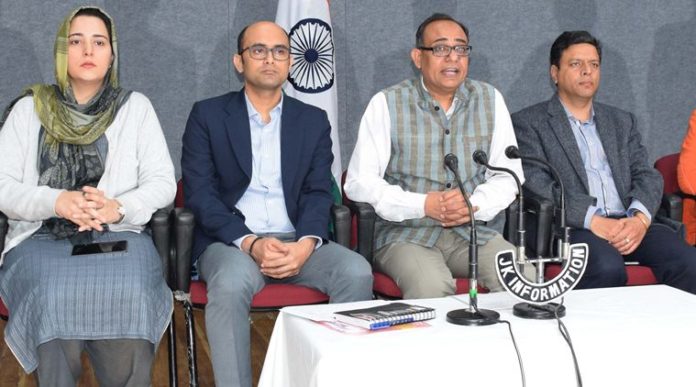
Jammu (NVI): The Union Territory of Jammu and Kashmir is fully prepared to deal with the Coronavirus outbreak and no positive case of the disease has been reported so far, Principal Secretary, Planning, Development and Monitoring, Rohit Kansal said today.

Addressing a press conference in Jammu, Kansal said that that administration is monitoring the situation closely in order to identify suspects.

“21 suspected cases have been tested so far and no positive case has been reported so far across Jammu & Kashmir. Entire administrative machinery, including health machinery, is in a state of full alert,” he said.

Addressing media persons about the emerging situation due to the spread of COVID-19 virus commonly called Coronavirus across the world, he said that the situation is being closely monitored in Jammu and Kashmir to identify all suspected cases of the virus.

Ensuring that the UT of J&K is in a state of alert, Kansal said the surveillance for this virus has been increased ever since the first advisory was issued by the Government of India on 2nd February 2020.

He informed that “so far a total of 201 individuals have been contacted in Jammu and Kashmir. These include individuals who either had a travel history to countries such as China, South Korea, Iran, Thailand, Italy, South East Asia, etc or came in contact with persons who had traveled to these countries. 21 suspected cases have been tested to date and no positive case has been reported so far across J&K”.

Urging public to not panic, he assured that entire administrative machinery including health machinery has been further activated and is in a state of full alert and all facilities as required are being put in place.

“100 per cent self declaration at the airports of Jammu and Srinagar will start from tomorrow to trace any such traveller having travel history to the infected countries. Further, check points for passengers travelling by road have been set up at Lakhanpur and Lower Munda (Zig) to identify individuals with travel history to these countries”, he added.

Further, dedicated 24×7 Data Control Centres have been established at Srinagar and Jammu to receive the information of travellers coming from the affected countries and to receive information from the Government of India to further transmit the same to the districts for their tracing at the earliest, Kansal said, adding that all suspected cases are being managed through the defined protocols.

“We want to assure everybody that there is absolutely no cause of panic. All the required protocols and steps are being taken. Doctors, health specialists administrative officers of health departments are reaching out to everybody through mass media informing people at large of the various respiratory hygiene, cough and sneeze etiquette, hand hygiene steps that are needed to be taken. The department will continue to engage with everybody on these issues”, Kansal maintained.

Responding to a question by the media person, Bhupinder Kumar Mission Director NHM informed that adequate number of facilities have been raised both in Jammu and Srinagar as well as district-level including quarantine and isolation facilities, ICUs with dedicated ventilators have also been set up.

Meanwhile, Cabinet Secretary, Rajiv Gauba today held a Video-Conference with Chief Secretaries and Health Secretaries of States/UTs to review their preparedness to deal with the evolving situation of Coronavirus amid mounting concerns over rapid spread worldwide.

Union Health Secretary and other senior functionaries of the Government of India also participated in the meeting.

Chief Secretary J&K, B V R Subrahmanyam along with senior officers from administration and Health Department attended the meeting on behalf of Government of Jammu and Kashmir.

Cabinet Secretary asked the Chief Secretaries to review, assess and monitor the arrangements in the States/UTs, and ensure adequate quarantine, isolation facilities and equipment are available to deal with suspected or confirmed cases as per the mandated protocol. Further, it was informed that filling up of self-declaration forms at the point of entries including airports has been made mandatory to record travel history of the passengers and contact, if any, with a person from any of the severely affected countries.

Earlier today, Divisional Commissioner, Kashmir, Baseer Ahmad Khan visited Airport and inspected ground zero arrangements made by the administration to stem the Coronavirus (COVID-19) disease at initial level.

The preparedness and arrangements are put in place for screening the passengers and tourists which are arriving daily by air to Srinagar airport.

Jammu: MC proposes renaming airport, varsity after Dogra rulers

Mubashir Bukhari

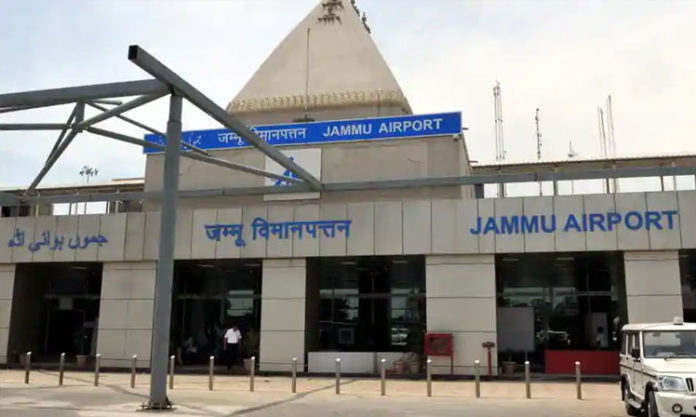
Jammu (NVI): After changing the name of historic ‘City Chowk’ to ‘Bharat Mata Chowk’, the Jammu Municipal Corporation (JMC) has proposed to name the state-run university and airport in Jammu after Dogra rulers.

Senior BJP leader and Deputy Mayor of JMC, Purnima Sharma said that two proposals were moved in the general house to rename Jammu Airport and Jammu University after Dogra rulers.

According to the resolutions, the Jammu airport should be renamed as Maharaja Hari Singh Jammu Airport and the local university as the Maharaja Gulab Singh Jammu University.

Sharma said that they have recommended to the UT administration to rename these institutions.

Maharaja Gulab Singh was the founder of the Dogra rule in Jammu and Kashmir and Maharaja Hari Singh was the last Dogra ruler, who acceded Jammu and Kashmir to India in 1947.

Earlier, historic City Chowk in old Jammu was renamed ‘Bharat Mata Chowk’ while another intersection was named ‘Atal Chowk’ in memory of former prime minister Atal Bihari Vajpayee after the passage of a resolution by the general house of the BJP-led JMC.

The Bharatiya Janata Party swept the JMC polls, winning 43 of the 75 wards, after the urban local bodies elections were held in the erstwhile state in four phases from October 8 to 16 in 2018 after a gap of 13 years.

J&K to have redefined Industrial Policy soon: Lt Governor

Srinagar (NVI): Jammu and Kashmir Lieutenant Governor, Girish Chandra Murmu today said that J&K would soon have its own redefined Industrial Policy which would provide a comprehensive plan for the development of Industrial and Trade sectors.

The governor’s remarks came while interacting with a delegation of Jammu and Kashmir Economic Forum (JKEF)-an amalgam of several trade body associations led by Neeraj Anand.

He said that the Government would develop industrial areas and provide a suitable environment for its growth and is taking several initiatives to promote J&K as an investment destination.

Responding to pleas made by delegations, the Lt Governor said that Pashmina, Handloom, Handicrafts and other allied sectors were the backbones of the economy of Jammu and Kashmir and the Government was taking every possible measure to streamline the sector in J&K.

He asserted that J&K’s handicrafts are world-famous and the traditional handicraft industry has emerged as a large industry. He said that due to its large employment base and exports potential, the industry has been receiving priority attention of the government.

He urged the stakeholders to come forward and list the grievances and grey areas in their sectors so that a holistic view can be taken to bolster the UT’s economy.

The trade body members from all the Kashmir districts including, Srinagar, Budgam, Baramulla, Gandrbal, Kupwara, Bandipora, Pulwama, Anantnag, among other districts were part of the delegation.

US-Taliban deal: Worries for India
ANALYSIS

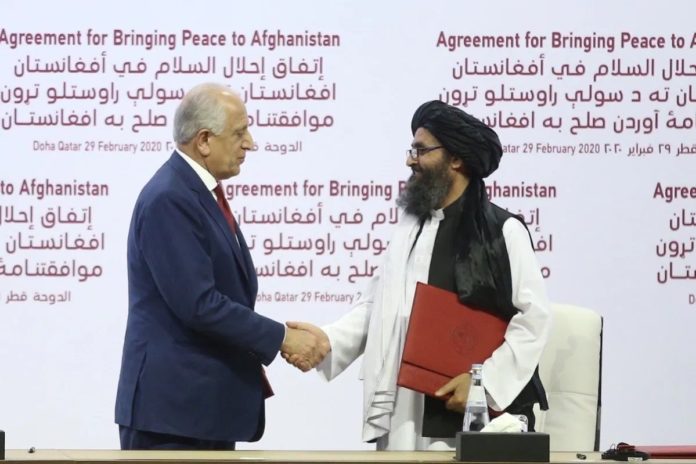
New Delhi (NVI): On February 24, President Donald Trump declared in the presence of a huge gathering of nearly 1.24 lakh people in Ahmedabad that the US is a “trusted partner” of India.

Just five days later, his government signed a deal with Taliban, which carries the risk of causing serious security implications for India since the Afghan terror group has been inimical towards India and has been targeting Indian assets in Afghanistan.

The February 29 deal signed in Doha essentially provides a face-saver to the US for complete withdrawal from Afghanistan, within 14 months, after 19 years during which it suffered huge losses in terms of men and finances.

But the impact of the deal is apprehended to be serious, particularly considering the objectives of Taliban and the baggage of trust deficit it carries. Given the history of Taliban’s betrayals, it would be naive to believe in what it commits, even though it has not committed much in the agreement.

Living up to its reputation, the Taliban has already announced resumption of ‘operations’ against the government forces, ending a brief truce declared in the run up to the deal. In fact, one terror attack has already been carried out.

The mainstreaming of Taliban, effected by the deal, is expected to encourage the terror outfit to step up its military operations and attacks to dislodge the democratic set-up and decimate other Afghan factions.

Even during the presence of the US and other NATO forces, the militia, over the last several years, has been increasing its area of influence by capturing more parts of Afghanistan.

More the areas it brings under its fold, the more is the risk, particularly for India, considering the history and avowed intentions against India.

India, notwithstanding its presence at the deal-signing ceremony, has already articulated its unease, with External Affairs Minister S Jaishankar saying the US has been told that the gains made in the last 18 years should not be withered.

India’s concerns stem from that fact that the Taliban, during its rule from 1996 to 2001, and even afterwards, worked to hurt its interests, including through repeated terror attacks. Taliban also has close association with Lashkar-e-Taiba (LeT), which was, in fact, founded in Kuduz in Afghanistan.

Taliban, which is a proxy of Pakistan, has made it clear that India should have nothing to do in Afghanistan and should leave. India has more than 2 billion dollars of investment in Afghanistan and is engaged in capacity building of the local population through several programmes.

Afghanistan under Taliban was virtually a buffer area for Pakistan and its machinations to hurt India and its interests. After the exit of the US-led forces and possibly Taliban gaining more power, the same is feared to be repeated.

One may recall the hijack of Indian Airlines plane IC-814 to Kandahar in December 1999 by Pakistan-supported terrorists and the way Taliban frustrated India’s attempts to free the hostages is a stark reminder of its nefarious designs.

It is believed that after the aircraft landed in Kandahar, the Taliban provided the five hijackers with more weapons, including assault rifles, rather than making any effort to disarm them and free the hostages.

India’s repeated requests for sending its special forces to tackle the hostage situation was also denied, making it clear that it wanted no trouble for the hijackers.

Even after India released three dreaded terrorists in Kandahar in exchange for 166 hostages, the Taliban regime allowed them to travel all the way to Pakistan without any hindrance.

Following its ouster from government, the Taliban continued to target Indian assets and interests in Afghanistan. One of the major such strikes was the August 2008 suicide bomb attack at the Indian Embassy in Kabul, in which an Indian Brigadier and a senior IFS officer were among 60 people killed.

Another major incident was the terror attack on Indian Medical Mission in Kabul in February 2010, in which 6 Indians were killed.

It also targeted the men of Indian Border Roads Organisation engaged in constructing Zaranj-Delaram highway.

Besides, the Taliban repeatedly targeted Indian Consulates in Kandahar and Jalalabad.

While finalising the agreement, the US has made a lot of concessions as Trump’s only intent seemingly was to see how America could wriggle out of the never-ending war and its forces could return home.

Among other things, the agreement signed in Doha on February 29 says, “…Taliban will not allow any of its members, other individuals or groups, including al-Qa’ida, to use the soil of Afghanistan to threaten the security of the United States and its allies.”

In the pact, the US has made a promise to work for lifting of sanctions on the Taliban members and engage with other members of the UN Security Council with the purpose of doing so by August 27 this year.

In the agreement, the Taliban also extracted a promise from the US that its 5,000 fighters would be freed from prisons by the Afghan government. It is a different matter that that the Ashraf Ghani government is not willing to implement this.

The deal also says that the US and Taliban “seek positive relations with each other and expect that the relations between the United States and the new post-settlement Afghan Islamic government as determined by the intra-Afghan dialogue and negotiations will be positive.”

This was unthinkable till a couple of years back as the US had set out to eliminate Taliban for harbouring and associating with Al Qaida, which carried out the unprecedented terror attacks on World Trade Centre and three other places in America on September 11, 2001.

Being a major political issue in the US, the return home of the American troops from the longest ever war in the US history marks fulfilment of a poll promise made by Trump, who is seeking re-election this November.

Trump’s predecessor Barack Obama also had worked in this direction by substantially reducing the presence of American troops in Afghanistan, but the current US President’s move entails complete withdrawal.

The US troops, along with NATO allies, invaded Afghanistan in October 2001 under ‘Operation Enduring Freedom’ launched against Al Qaida and Taliban, which was then ruling the country and providing safe haven to Al Qaida.

While targeting Al Qaida, the US-led forces went after Taliban and succeeded in ousting it from power by December 17. However, the top terrorist leaders, including Al Qaida chief Osama bin Laden and Taliban chief Mullah Omar remained elusive during the intense military campaign of the US-led forces.

Laden was later tracked and hunted down by the Americans in Abbottabad in Pakistan in 2013. Omar was also declared killed in 2015.

The Taliban (meaning ‘students in Urdu and Pashto) was formed by Pakistan in early 1990s from among the Afghan refugees in madrassas after the USSR left Afghanistan and various factions were fighting to control Kabul.

The big militia groups were Northern Alliance led by Ahmad Shah Masood, Hizb-e-Islami led by Gulbadin Hekmatyar and one led by Uzbek warlord Abdul Rashid Dostum.

Pakistan, particularly its notorious intelligence agency ISI, provided Islamic indoctrination, weapons, training and guidance to the Taliban cadres and pushed them into the war in Afghanistan.

By September 1996, the Taliban captured Kabul by dislodging President Burhanuddin Rabbani’s government and two years later, it expanded its control to about 90 per cent of Afghanistan.

It was a brutal regime, which enforced severe Sharia rules under which men were required to grow beard and women had to be all-covered with burqa. The regime also indulged in severe punishments like public executions and banned all modes of entertainment, such as TV, music and cinema.

Girls were barred from going to school.

In 2001, regime destroyed the famous Bamiyan Buddha statues in central Afghanistan.

And if the deal results in Taliban returning to power in Kabul or capturing it, the same brutalities will be back, which is a sad prospect for the people of Afghanistan.

Two Noida schools shut amid coronavirus scare

Representational image

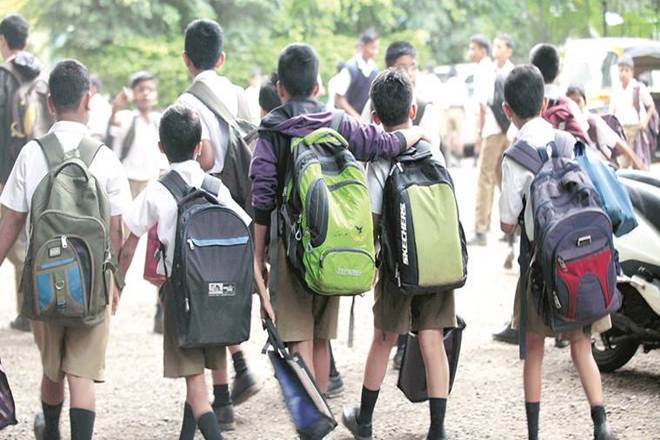
New Delhi (NVI): Two Noida schools have been closed today amid coronavirus scare, a day after a Class 6 student’s father was detected with the infection.

The health department officials have visited the campus and collected blood samples of two kids, according to media reports.

The health authorities swung into action after they received reports that a school in Noida had asked parents to take their kids home since some children had attended a birthday party organised by the person who was on Monday tested positive for coronavirus.

Meanwhile, the Karnataka health department on Monday began the giant task of tracking and identifying all people who could have come in contact with the 25-year-old software engineer from Bengaluru who has tested positive for COVID-19.

The affected person, now in Telangana, is said to be working with a city-based software company; he had travelled to Dubai for a company meeting and interacted with software engineers from Hong Kong there.

The United States has also reported six deaths from the coronavirus, as the outbreak that started in China continues to spread to new countries around the world and the World Health Organization (WHO) has urged the countries to step up containment measures to rein in the infection.

South Korea has reported 600 new coronavirus cases on Tuesday. The Korea Centers for Disease Control and Prevention (KCDC) also says three more people died overnight.

Total cases in the country now stand at 4,812, making it the largest outbreak outside China.

Deaths in Italy rose to 52, while Iran’s toll rose to 66. Italy is the hardest-hit country in Europe, while Iran has reported the most deaths outside China.

The head of the World Health Organization (WHO), General Tedros Adhanom Ghebreyesus, said that public health officials are operating in “uncharted territory” as they combat the spread of the novel coronavirus, which has infected more than 90,000 people across 73 countries and territories as of Monday evening.

The virus has spread to every continent except Antarctica since it was first identified in December last year in the central Chinese city of Wuhan.

To date, there have been 172 deaths reported outside mainland China, raising the global death toll to 3,115.

Jharkhand: IAS officer sets example, delivers baby at Govt hospital

New Delhi (NVI): A woman IAS officer has set an example of sorts in Jharkhand.

Kiran Pasi, posted as Deputy Commissioner in far-off Godda, chose not to opt for any private hospital in some city when she was to give birth to a child but got admitted in a government hospital in her district.

Godda, located in northeastern part of Jharkhand, is about 325 kms from Ranchi and is mostly inhabited by a tribe called Santhals.

She underwent a C-section delivery at 9.50 am at Sadar hospital in Godda on Sunday to deliver her second baby, a boy. Her delivery did not take place in emergency conditions but it was her conscious move to get it done in the government hospital to showcase how safe it is there.

Her action is now being celebrated by doctors at the hospital as well as state administration.

Even Jharkhand Chief Minister Hemant Soren took note of it and tweeted: “Your efforts to show that health facilities in the state are capable is praiseworthy”.

The woman IAS officer’s decision is also being praised by many on social media.

MUST READ